
Chiranjeevi Maddala
February 14, 2026
As the national capital prepared to host one of the most significant AI impact summits in recent memory, the energy surrounding artificial intelligence and its transformative potential was unmistakable. Participants from across the globe converged to showcase AI’s impact across diverse domains—healthcare, agriculture, governance, and education—reflecting how India is steadily contributing to a larger global transformation. From government corridors to research laboratories and startup hubs, the consensus was clear: artificial intelligence is no longer a futuristic aspiration but a present-day reality that demands strategic engagement, particularly in the realm of education. The timing could not have been more significant. With India’s demographic dividend offering an unparalleled opportunity to build a generation of AI-literate citizens, the intersection of policy intent and technological innovation has become the most critical frontier in the country’s development story.
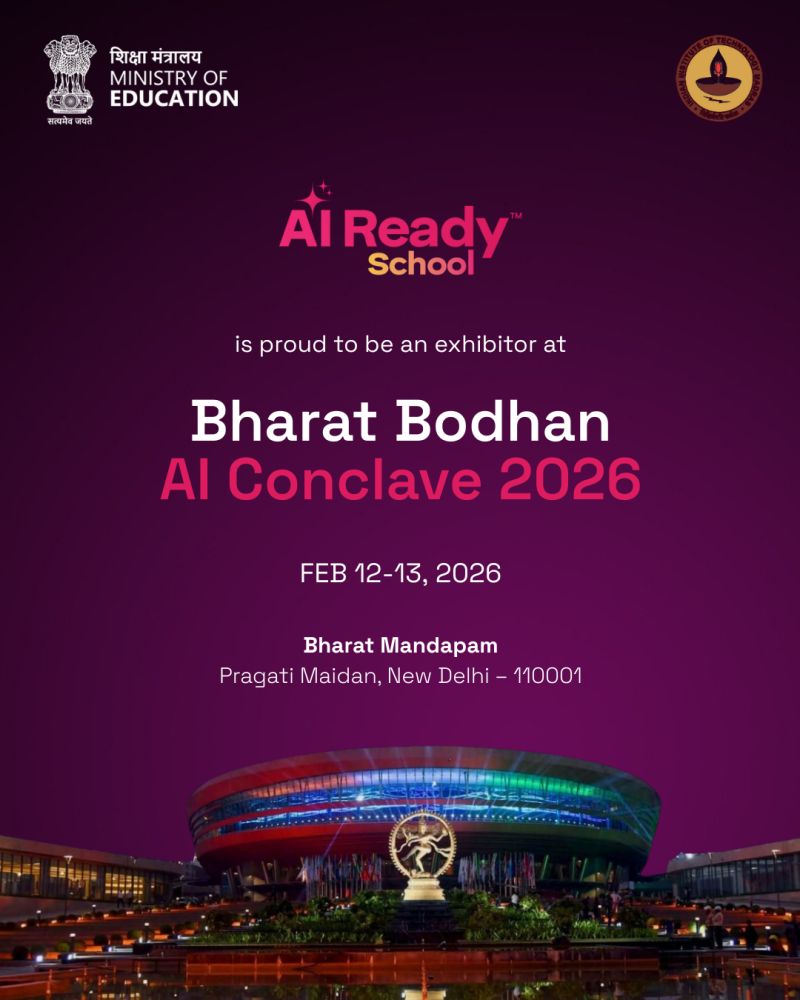
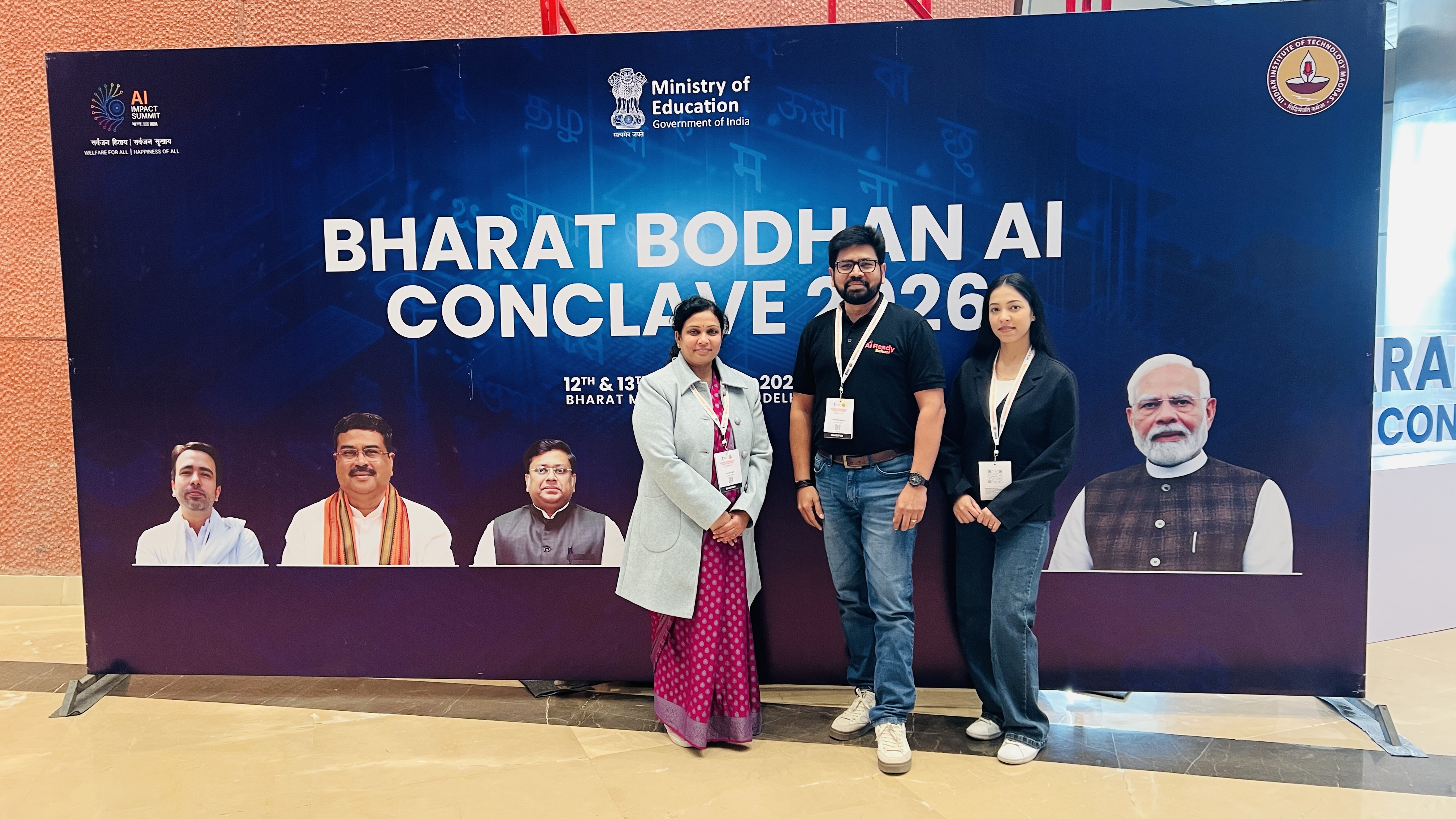
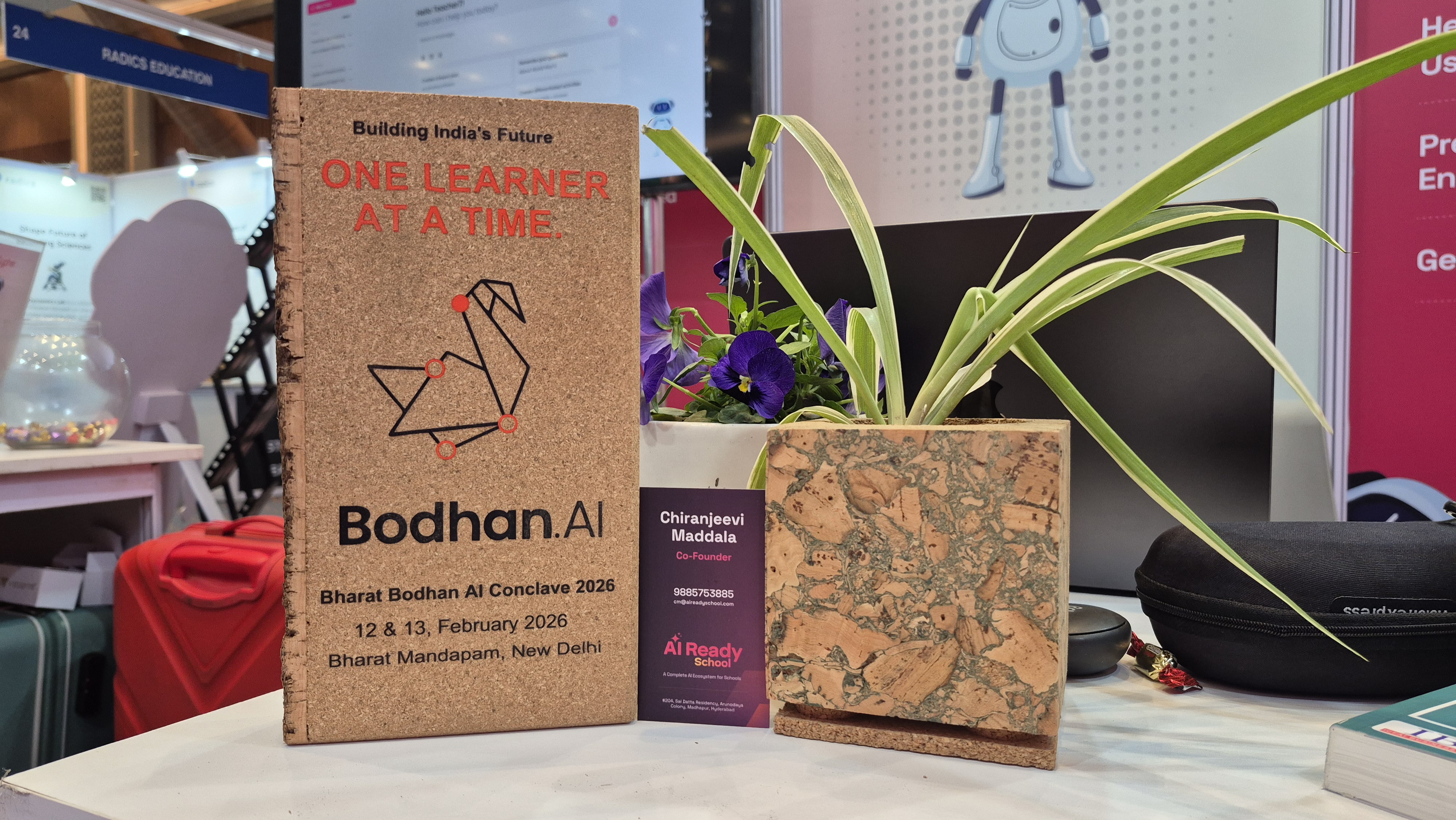
In a landmark step toward integrating AI meaningfully into the education ecosystem and ensuring that India’s schools are at the forefront of this revolution, the Ministry of Education, in close collaboration with the Indian Institute of Technology Madras, organized the Bharat Bodhan AI Conclave 2026 at the prestigious Bharat Mandapam on 12–13 February 2026. The two-day conclave brought together an unprecedented gathering of India’s education and technology ecosystem, with more than 3,100 registrations, approximately 2,000 students, over 600 delegates, and nearly 120 exhibitors showcasing AI-enabled innovations. Policymakers, state governments, academic researchers, philanthropic institutions, and ed-tech innovators gathered under one roof to examine how artificial intelligence can transform school education—particularly in the areas of foundational literacy and numeracy (FLN), teacher effectiveness, governance efficiency, and multilingual inclusion.
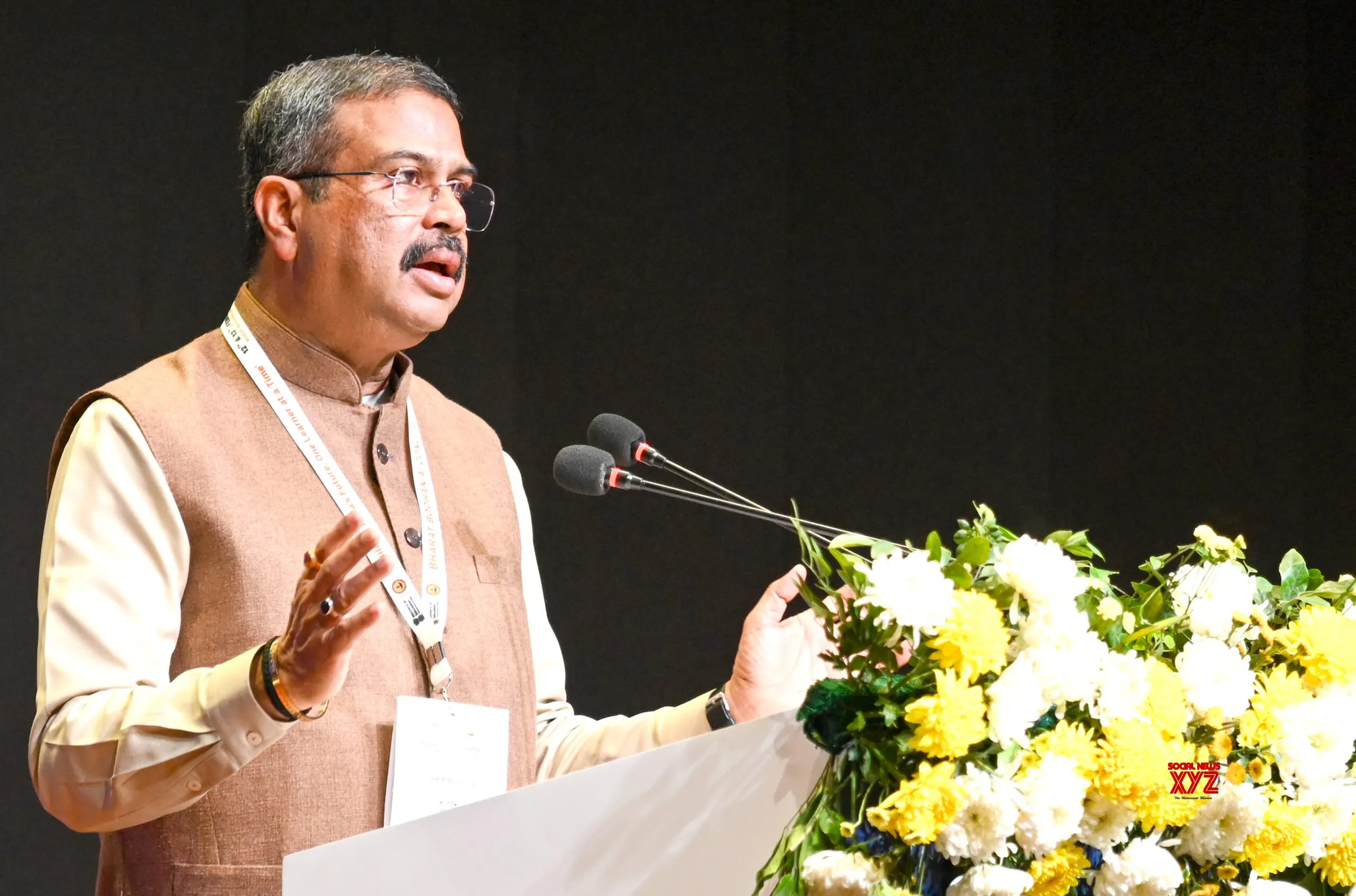
The conclave was inaugurated by Shri Dharmendra Pradhan, Union Minister for Education, who launched the Bharat Bodhan AI Conclave and emphasized the need to integrate AI into education at scale while promoting ethical, inclusive, and responsible AI. He called for interoperable and sovereign AI systems aligned with India's linguistic diversity and development goals.
Shri Sanjay Kumar, Secretary, Ministry of Education, highlighted how AI offers a unique opportunity for personalization through adaptive learning interventions tailored to every child, and called for collaborative platforms to share best practices nationwide, along with a sovereign Large Language Model to strengthen linguistic diversity and technological self-reliance.
Prof. V. Kamakoti, Director of IIT Madras, reinforced these themes by stressing that AI must serve as a bridge to make quality education inclusive and accessible across India. He urged participants to move beyond innovation for its own sake and focus on practical deployment with measurable learning outcomes. His call for a unified national framework—one that brings together diverse ed-tech players under a common structure—resonated deeply with the audience and set a collaborative tone for the rest of the event.
Participation in the Bharat Bodhan Conclave was strictly by invitation, underscoring the strategic and high-level nature of the discussions. This exclusivity ensured that the conversations were focused, outcome-oriented, and led by organizations with demonstrated impact in the AI education space. AI Ready School is proud to have been invited to be part of this exclusive forum. Being included among a select group of AI education contributors serves as a strong validation of AI Ready School’s impact-driven approach and its unwavering commitment to advancing AI literacy at the school level across India. This recognition reflects years of dedicated work in building AI competencies among students and educators through pedagogically-grounded, curriculum-aligned solutions that prioritize human cognitive development.
The overarching vision of the Bodhan AI Conclave aligns powerfully with AI Ready School’s mission to equip students and educators with future-ready AI competencies. Both share a common purpose: to move beyond traditional curriculum boundaries and emphasize skill development alongside knowledge acquisition. AI Ready School’s “Human First, AI Next” philosophy mirrors the conclave’s emphasis on ensuring that technology serves as an enabler of human potential rather than a replacement for it.
As Indian education undergoes rapid transformation, initiatives like this conclave demonstrate a collective commitment toward building an AI-empowered workforce prepared for global demands. The convergence of national policy priorities with AI Ready School’s Thinking 2.0 framework—which develops AI Sense across three dimensions: Building AI Sense, Mindful AI Usage, and a Human-First Approach—demonstrates that the organization is not merely participating in the AI education movement but is actively helping to shape its direction.
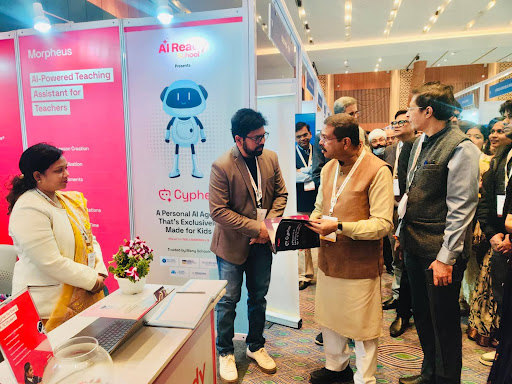
AI Ready School received an overwhelming and highly encouraging response at the event. Esteemed officials from the Ministry of Education, the National Council of Educational Research and Training (NCERT), the Central Board of Secondary Education (CBSE), NITI Aayog, various State Councils of Educational Research and Training (SCERTs), and multiple IIT wings visited the AI Ready School stall. Each visitor took valuable time to understand how the organization is working as a catalyst in this educational transformation, asking pointed questions about the pedagogy, technology stack, scalability, and real-world impact of its offerings.
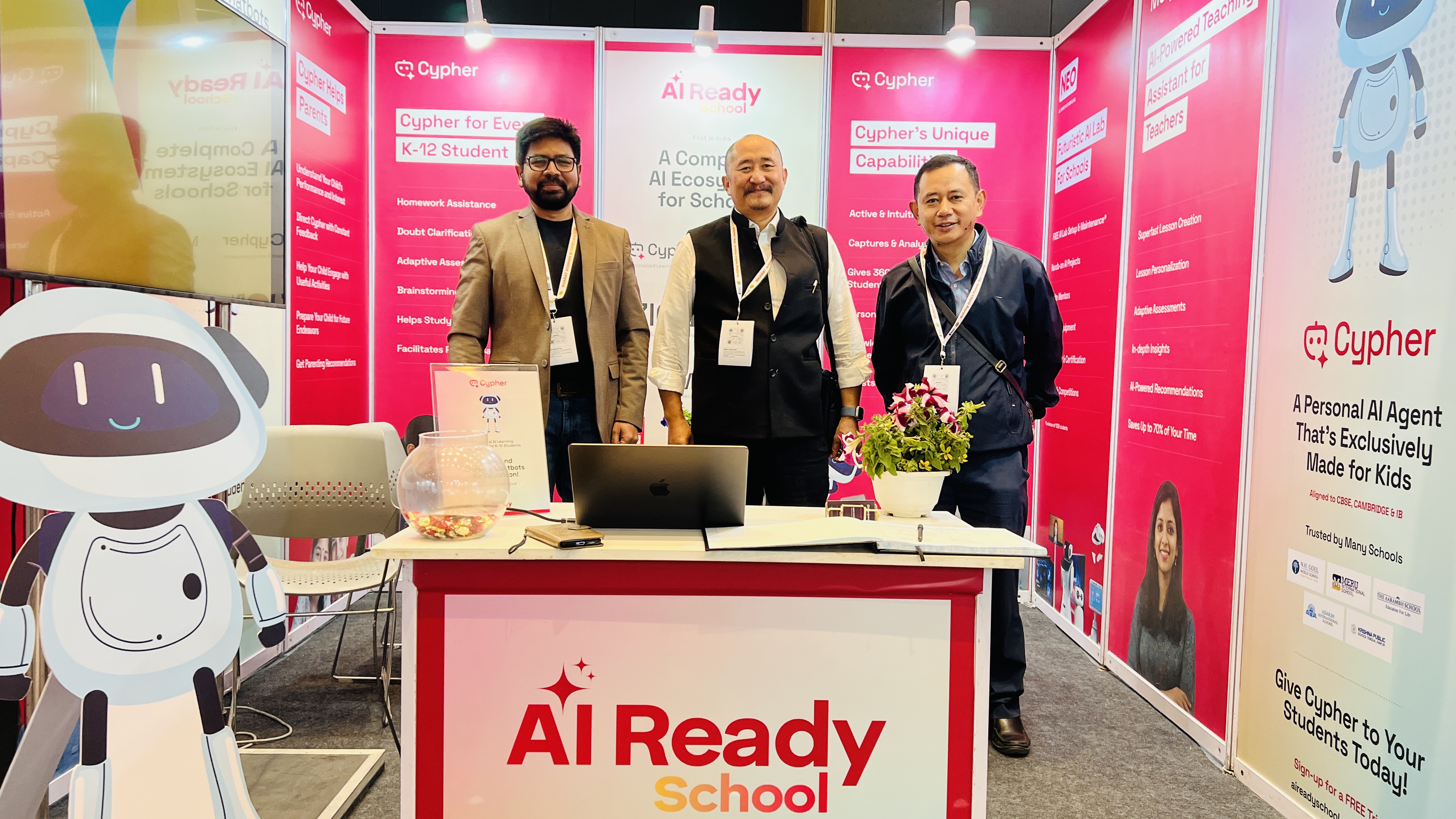
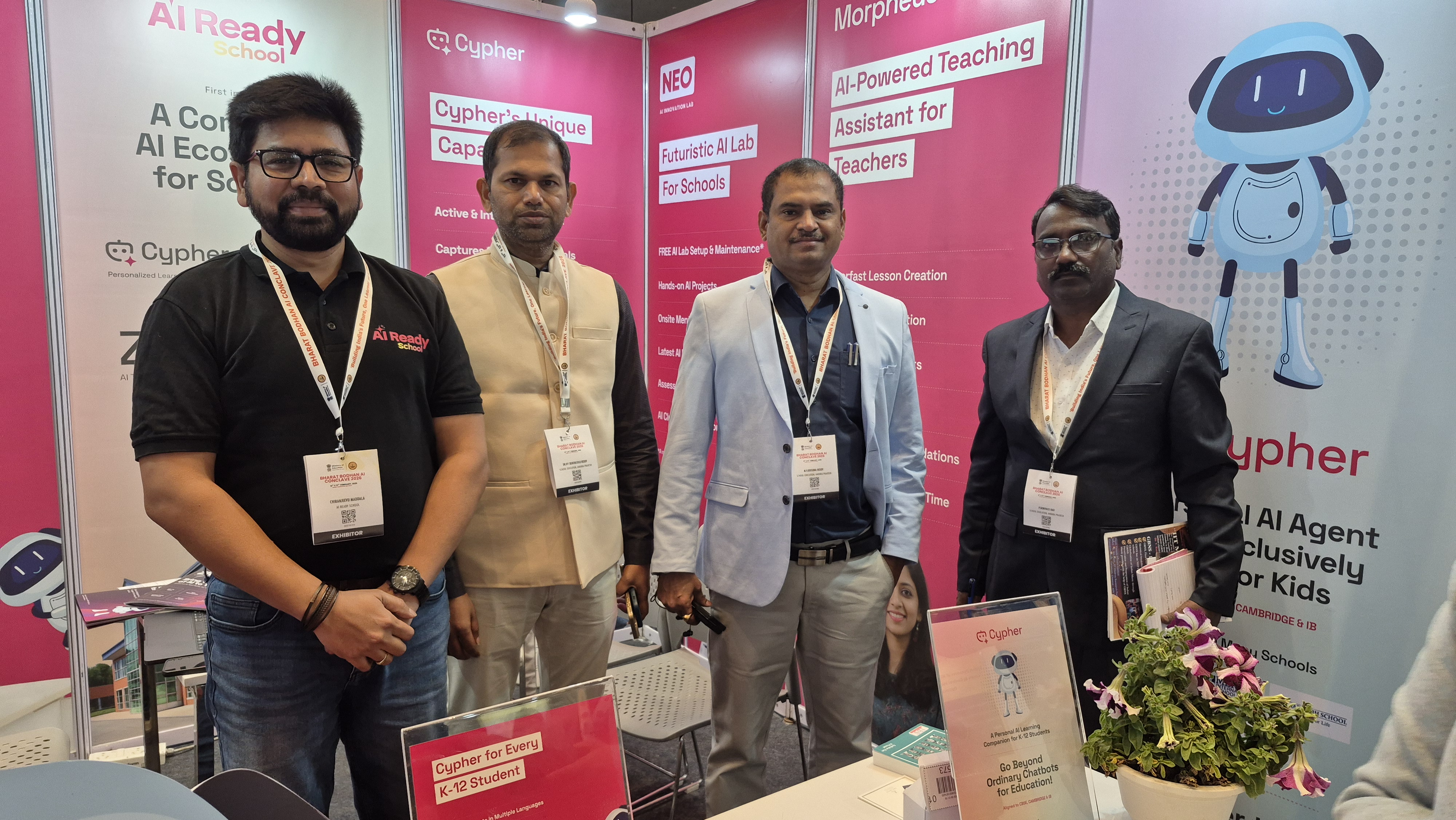
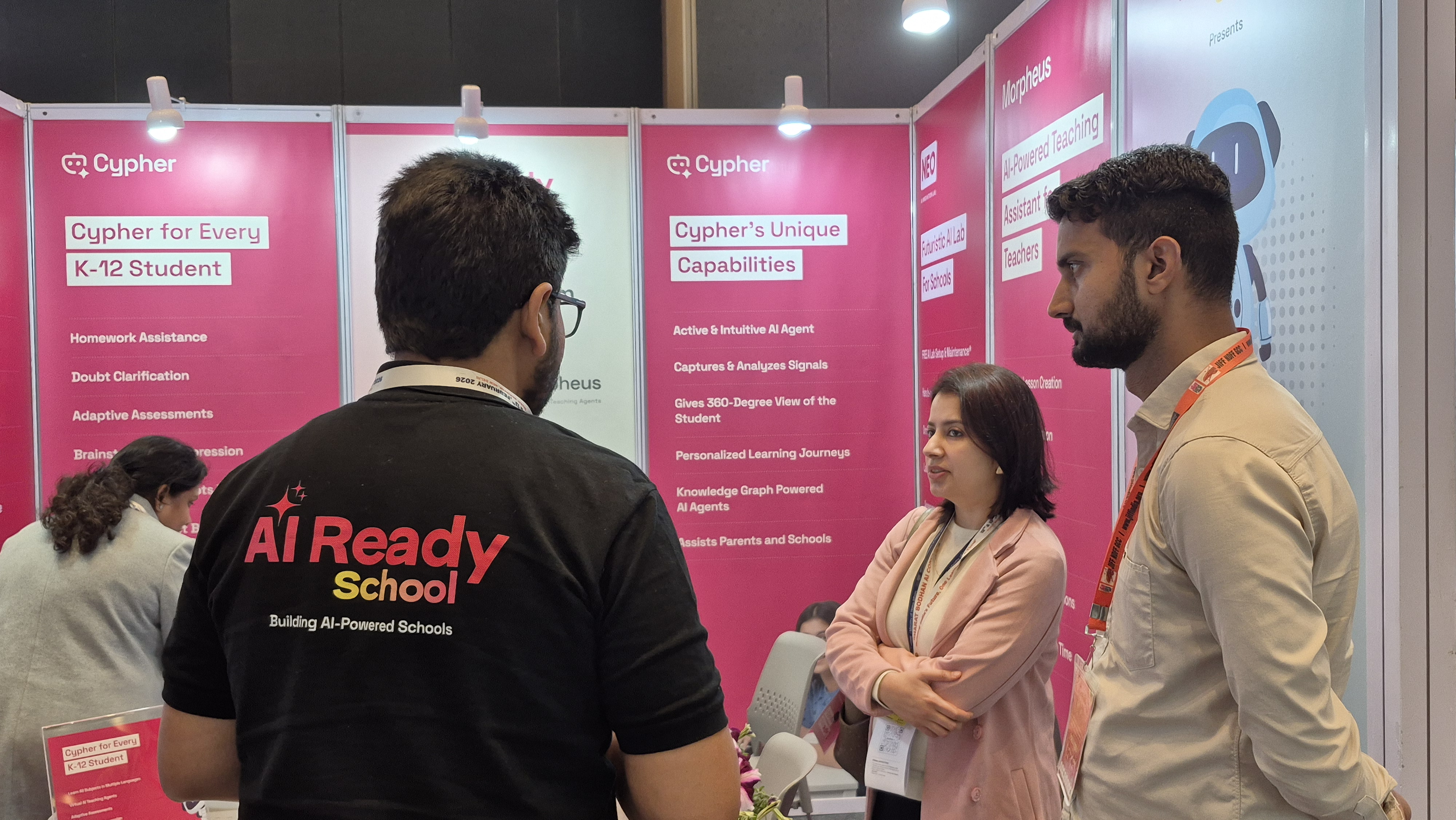
Engaging discussions with policymakers from NITI Aayog highlighted the long-term impact and benefits of upskilling young minds with AI competencies from an early age. These conversations went beyond surface-level introductions; officials were keen to understand how AI Ready School’s pedagogy draws from learning science research, how its products align with NEP 2020’s emphasis on experiential and skill-based learning, and how its distributed model could support AI literacy across tier-2 and tier-3 cities. SCERT officials from different states explored how AI Ready School’s initiatives could extend support to government school students, thereby ensuring that AI education is not a privilege limited to urban private schools but reaches every learner across diverse socio-economic backgrounds. These conversations opened doors for potential pilot programs and collaborations that could take AI education to the furthest corners of India, building on the momentum that AI Ready School has already established through its partnerships across multiple states.
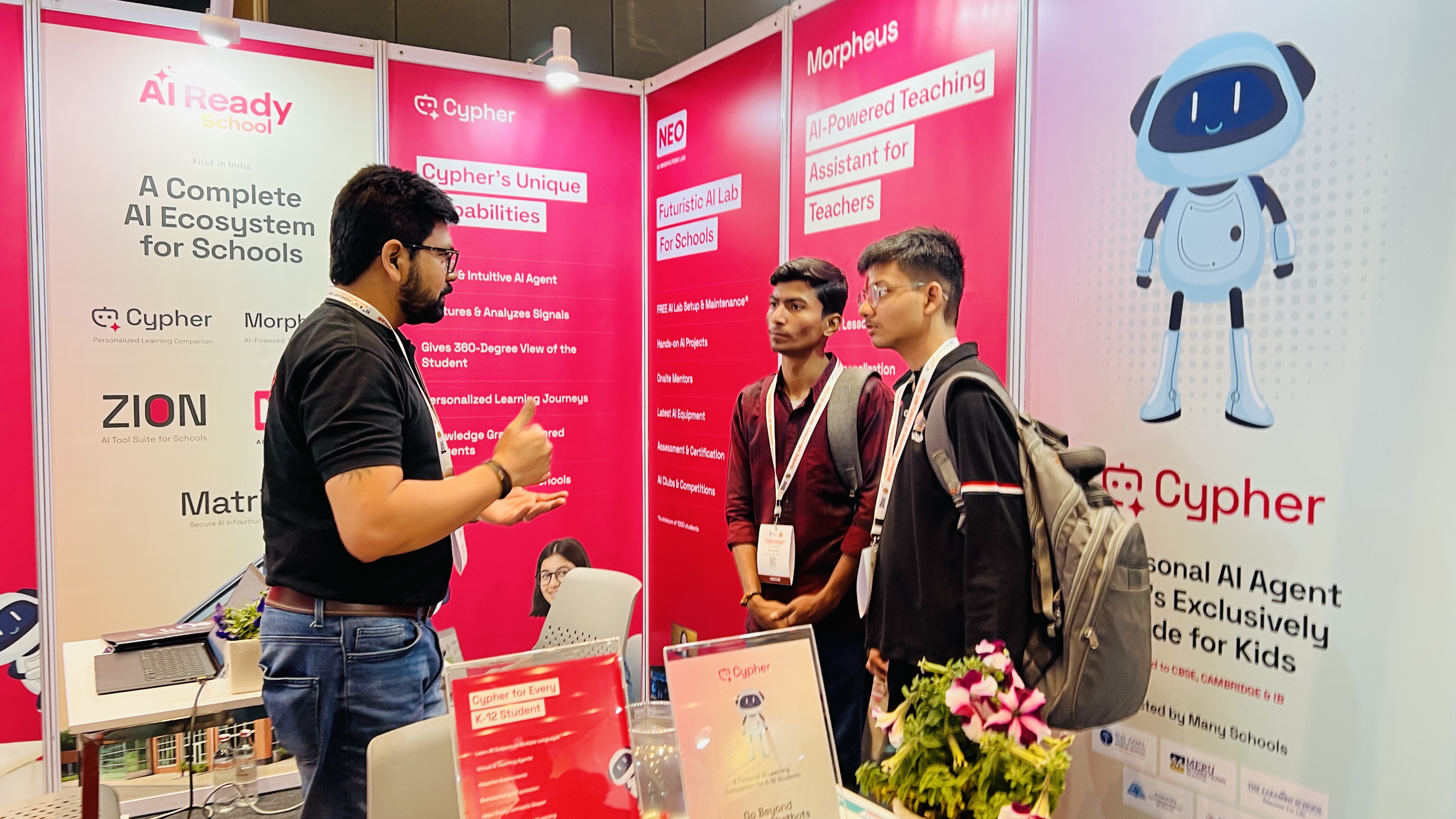
One of the most remarkable aspects of the conclave was the enthusiastic response from young learners. Students showed keen interest in interacting with Cypher, AI Ready School’s intelligent learning companion. What set Cypher apart from generic chatbots was its ability to offer personalization, engagement, and meaningful learning experiences rooted in sound pedagogical principles.
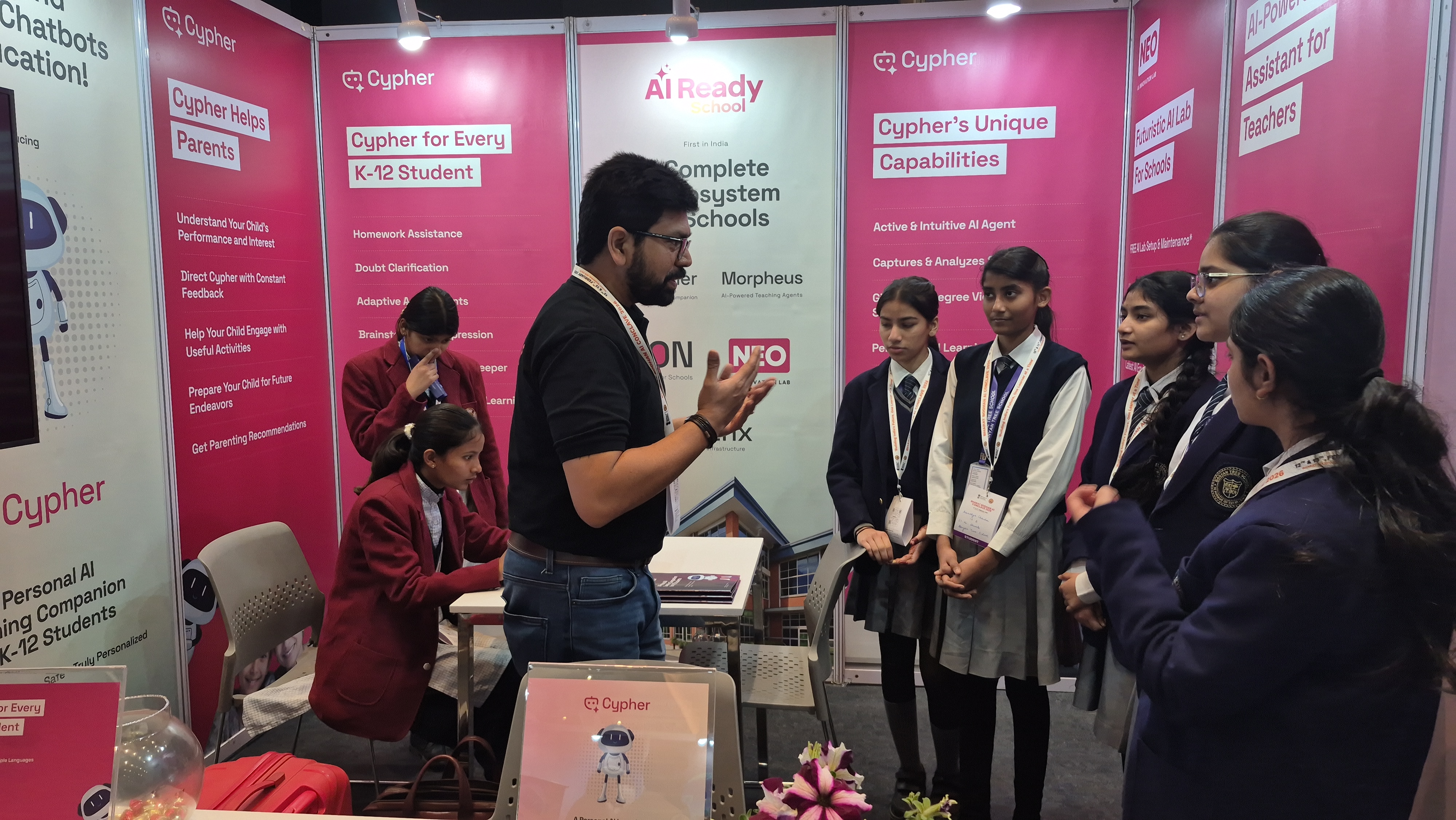
Cypher demonstrated its capacity to encourage critical thinking rather than simply answering questions, simplify complex AI concepts into accessible and age-appropriate explanations, and adapt its responses to individual queries and learning levels. Students were not looking for a passive tool that dispenses information; they sought an interactive companion that challenges them to think deeper and explore further. Cypher delivered precisely that—a reflection of AI Ready School’s belief that AI in education should guide learning rather than provide direct answers. The interactions also validated the pedagogical foundation underpinning Cypher’s design: drawing from constructivist learning principles championed by Jerome Bruner and the neuroscience-backed Four Pillars of Learning articulated by Stanislas Dehaene—attention, active engagement, error feedback, and consolidation. Watching students engage with Cypher in real time was a powerful demonstration that thoughtful AI design, grounded in learning science, creates qualitatively different educational experiences compared to generic chatbot interactions.
Private schools experimenting with innovative educational models also explored collaboration opportunities with AI Ready School. Discussions focused on integrating AI as a foundational future skill, ensuring students are prepared for evolving global industries and interdisciplinary applications of AI. Several school leaders expressed interest in piloting AI Ready School’s suite of products—including Cypher, ZION (a cloud-based platform with 30+ AI tools), NEO AI Innovation Labs (physical AI laboratories for hands-on learning), and Morpheus (an AI-powered learning management system)—as part of their academic roadmap.
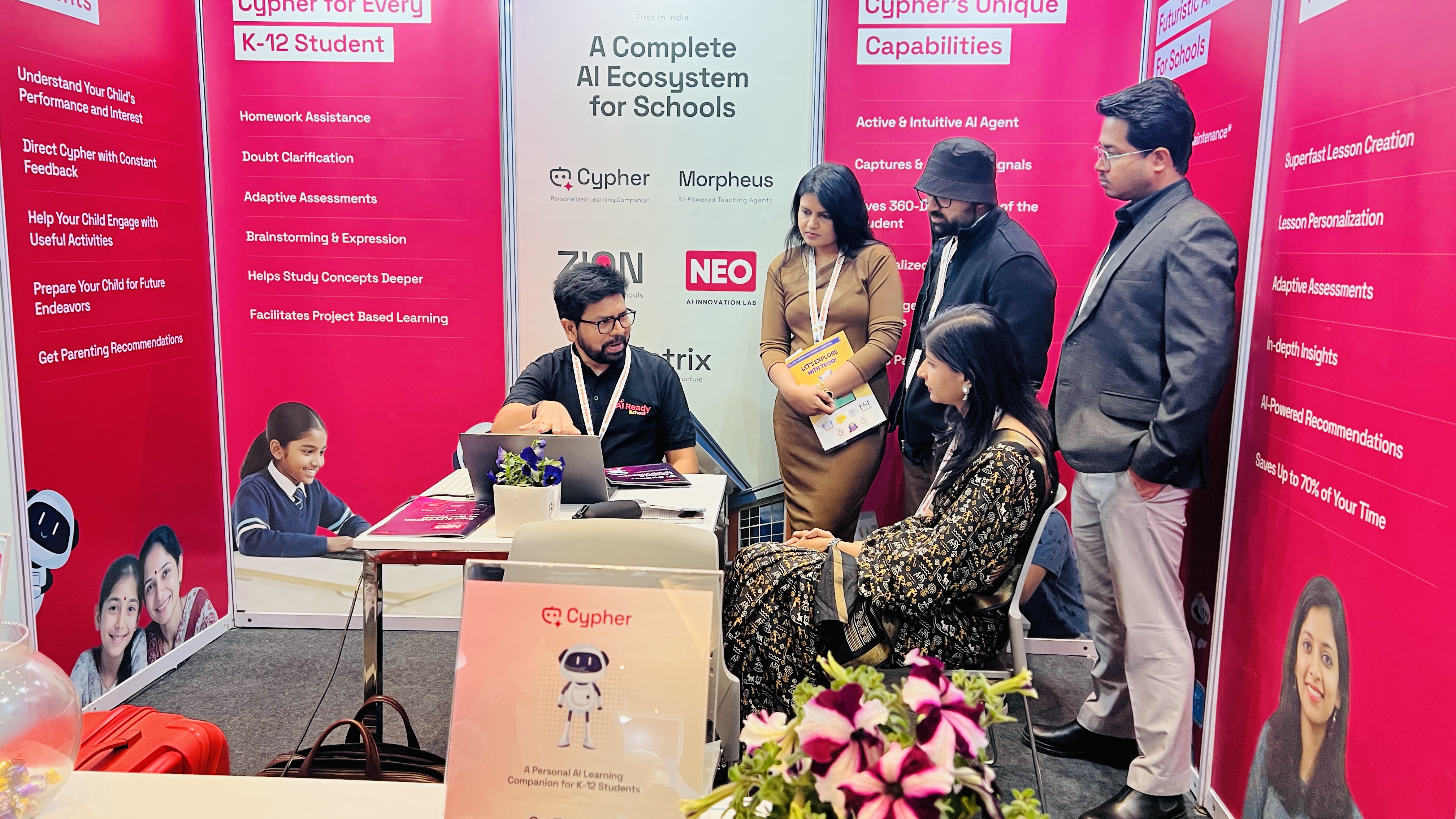
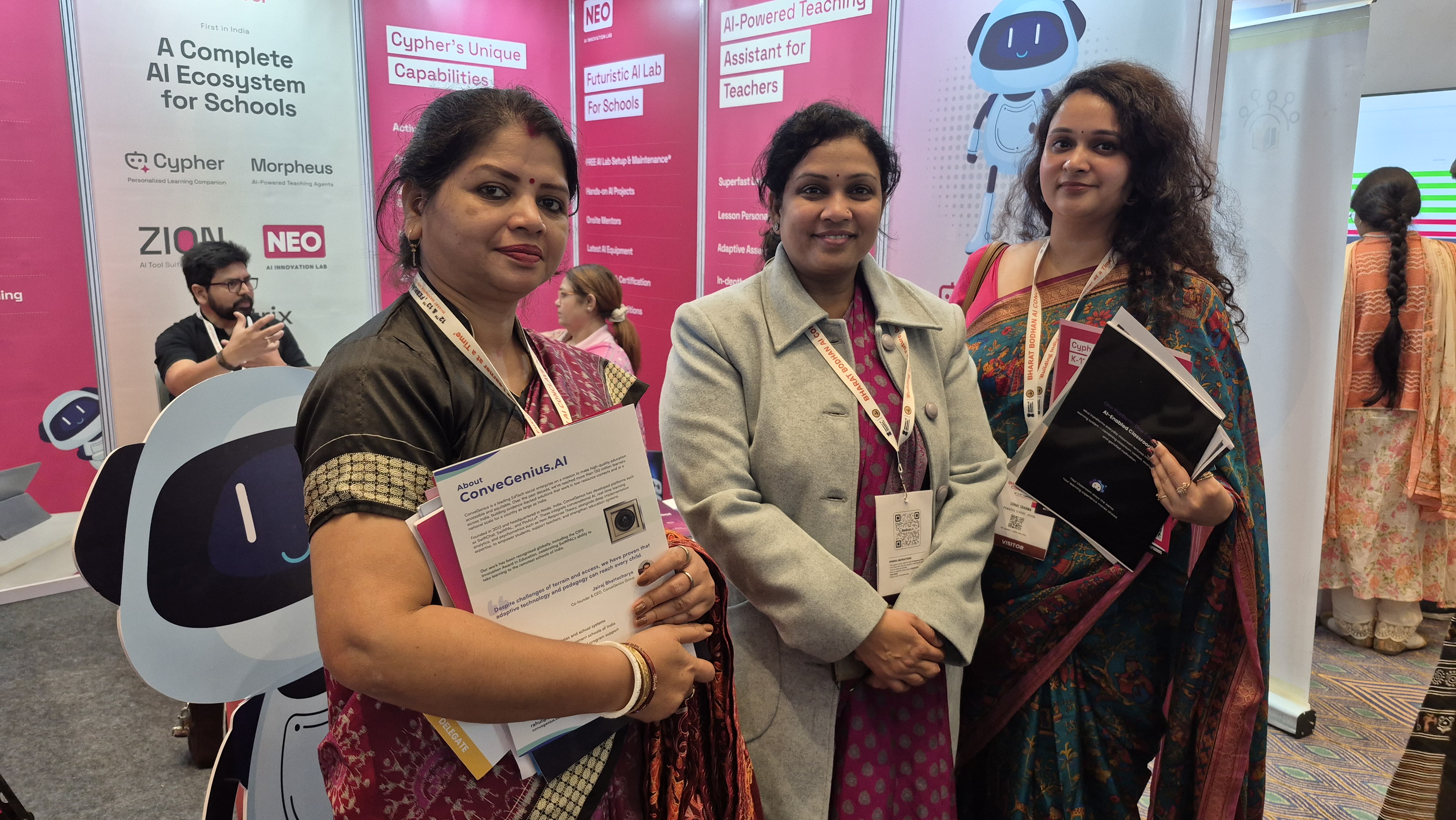
These conversations reinforced a shared belief that AI education must move from being an extracurricular add-on to an integral part of mainstream learning. School leaders recognized that the rapid pace of AI advancement means that students who do not develop AI literacy during their formative years risk being left behind in an increasingly competitive global landscape. The conclave provided the ideal setting for such partnerships to take root, with mutual interests aligned around student outcomes, scalability, and long-term impact. For AI Ready School, these discussions affirmed that its product philosophy—offering not just a single tool but a comprehensive ecosystem of Cypher, ZION, NEO Labs, and Morpheus—resonates with schools seeking holistic, end-to-end AI integration rather than piecemeal solutions.
The Bharat Bodhan AI Conclave 2026 marked a significant chapter in India’s AI education journey. The event represented a decisive shift from fragmentation to integration, bringing together visionary founders, policymakers, and educators on a unified national platform for the first time at this scale. It moved the conversation from theory to implementation, with concrete discussions centering on scalable AI adoption models in schools. And crucially, it shifted the emphasis from mere access to genuine inclusivity, ensuring that AI education reaches students across diverse socio-economic backgrounds.
Experts carefully evaluated participating organizations’ missions, strengths, and impact potential, reinforcing a culture of collaboration over competition. The spirit of partnership was evident throughout—every stakeholder was eager not just to showcase their own work, but to contribute to a larger, collective effort toward transforming Indian education through AI. What made this conclave particularly special was its ability to bring together voices from across the spectrum: national policymakers with the power to shape regulations, academic researchers pushing the boundaries of AI applications, and practitioners like AI Ready School who are on the ground daily, working with students and teachers to translate AI’s promise into tangible educational outcomes.
Following its impactful participation at the conclave, AI Ready School is strategically aligning its roadmap with the mission of the Ministry of Education and Bodhan AI to accelerate AI education for all. The insights gained from policymaker discussions, student interactions, and institutional collaborations will inform the next phase of product development, partnership expansion, and on-ground deployment.
AI Ready School remains committed to playing an active role in this national mission—transforming today’s learners into tomorrow’s AI-ready leaders. With its comprehensive product suite, research-backed pedagogy drawn from the work of scholars like Jerome Bruner and Stanislas Dehaene, and a clear focus on building AI Sense across every student touchpoint, the organization is uniquely positioned to support India’s ambition of becoming the global capital of AI.
While it may be early to predict the full scale of AI’s impact on Indian education, one thing is certain: the sector is no longer confined to textbooks alone. The shift toward innovation, skill-building, and AI readiness is firmly underway, and the Bharat Bodhan AI Conclave 2026 stands as a powerful symbol of this transformation—a gathering where every stakeholder served as both contributor and collaborator in shaping the future.
With unified leadership from the Ministry of Education, academic rigor from institutions like IIT Madras, and ecosystem-wide participation from organizations like AI Ready School, India is steadily advancing toward a future where AI-skilled learners contribute meaningfully to global progress. The conclave was not merely an event; it was a declaration of intent—a collective promise that India’s next generation will be equipped not just with knowledge, but with the AI competencies and critical thinking skills needed to lead in an increasingly intelligent world. For AI Ready School, the Bharat Bodhan Conclave represents both an affirmation and a launching pad—an affirmation that its “Human First, AI Next” mission is aligned with the nation’s highest policy priorities, and a launching pad for deeper engagements, wider reach, and a more profound impact on the millions of young learners who will define India’s future in the age of artificial intelligence.