
Chiranjeevi Maddala
February 11, 2026
From virtual tutors to personalized learning paths, discover how AI is revolutionizing education and what it means for students, teachers, and the future of learning.
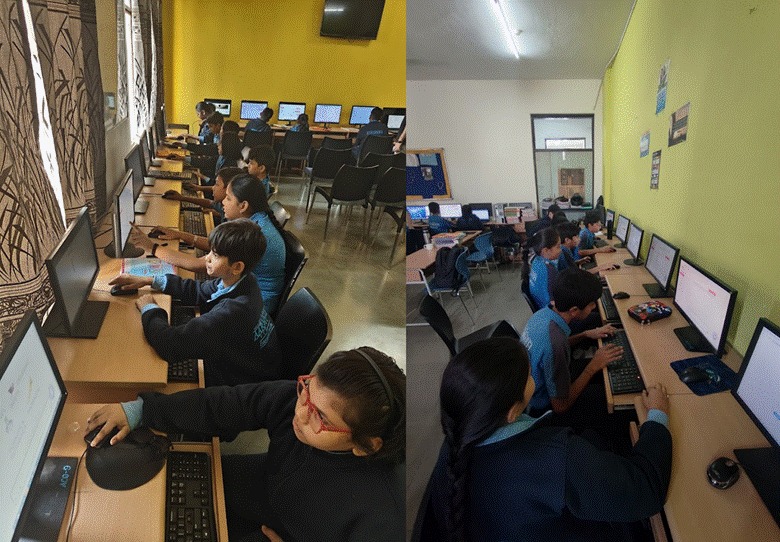
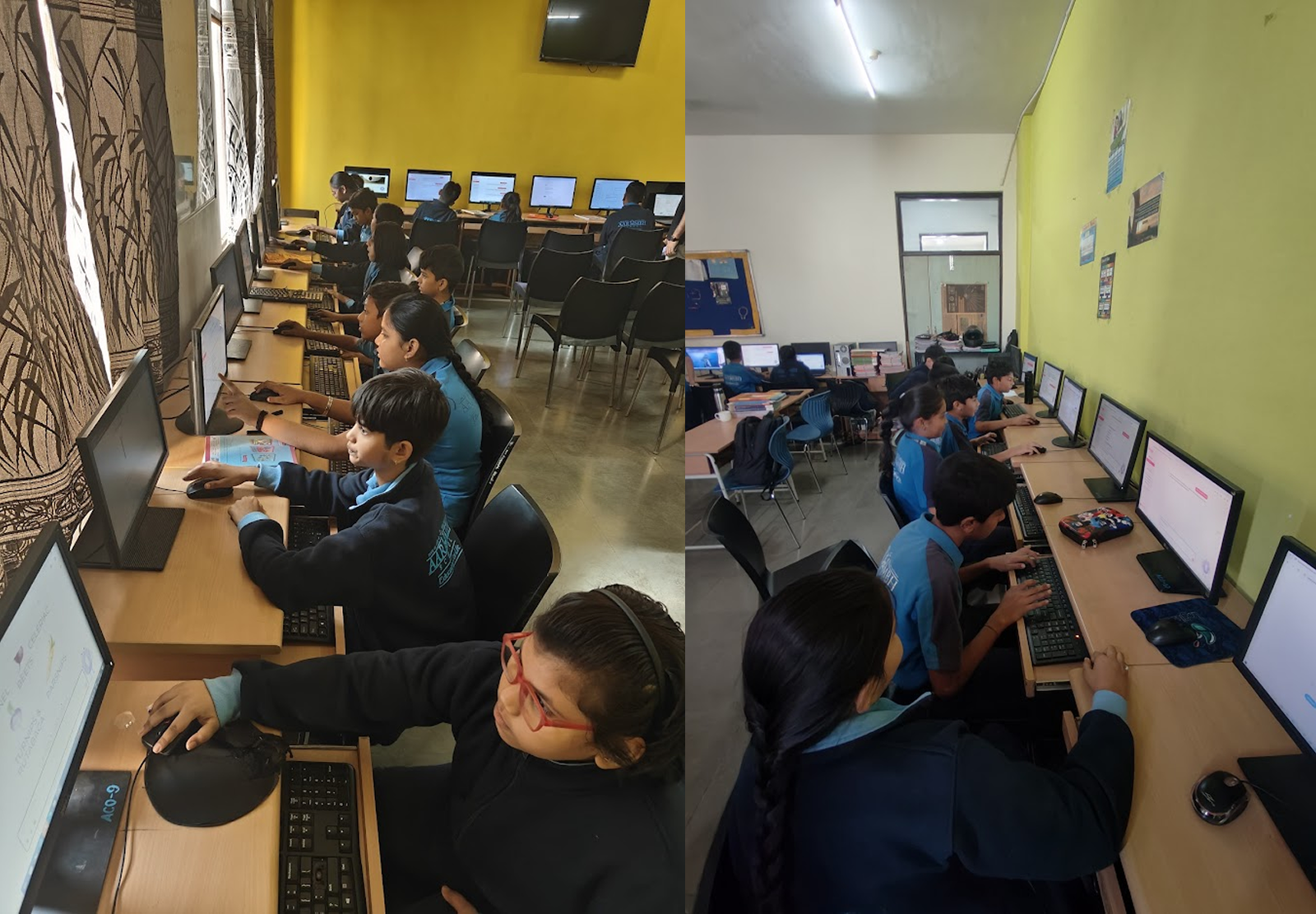
Walk into a classroom today, and you might be surprised by what you see. Students aren't just sitting in rows listening to lectures anymore. They're collaborating with AI in education tutors, exploring ancient civilizations through virtual reality, and receiving personalized feedback on their work within seconds. This isn't science fiction—it's happening right now in schools around the world.
AI in education has evolved from a futuristic concept to an everyday reality. And honestly? It's pretty exciting. Whether you're a teacher wondering how technology can lighten your workload, a parent curious about what your kids are learning, or an educator looking to stay ahead of the curve, understanding how artificial intelligence in classrooms is changing everything is no longer optional—it's essential.
At AI Ready School, we've been on the front lines of this transformation. We've seen first hand how the right tools and training can turn struggling students into confident learners and overwhelmed teachers into empowered educators. Our AI Ready curriculum isn't just about teaching kids to use AI—it's about preparing them for a world where understanding artificial intelligence is as fundamental as reading and writing.
When most people hear 'AI in education,' they might picture robots replacing teachers or students glued to screens all day. The reality is far more nuanced—and far more interesting.
Here's a problem teachers have struggled with forever: how do you teach 30 students who all learn differently, at different speeds, with different strengths? The traditional answer has been compromise—teach to the middle and hope the advanced kids don't get bored while the struggling ones don't fall too far behind.
AI changes that equation completely. Modern EdTech solutions powered by artificial intelligence can track how each student learns best. Does Maya grasp concepts better with visual diagrams? The system adjusts. Does Rahul need more practice with word problems before moving on? He gets targeted exercises. Is Priya racing ahead in algebra? She receives appropriately challenging material.
Platforms like Carnegie Learning aren't just digital textbooks—they're adaptive learning companions. They observe how students interact with material, identify exactly where confusion happens, and adjust the teaching approach in real-time.
Think of it this way: if a student hits a wall with quadratic equations, the AI doesn't just repeat the same lesson louder. It breaks the concept down differently, offers alternative explanations, provides visual representations, and creates practice problems that build confidence step by
step. It's like having a patient tutor who never gets tired and has infinite ways to explain the same thing.
Remember staying up late struggling with homework, wishing you could just ask your teacher one quick question? AI-powered virtual tutors and chatbots have solved that problem.
These aren't the clunky, frustrating chatbots of the past. Today's AI assistants can genuinely help students understand concepts, not just spit out answers. They can walk students through problem-solving step by step, explain the same concept five different ways until it clicks, generate practice problems at exactly the right difficulty level, translate explanations into different languages for multilingual learners, and connect new concepts to things the student already understands.
And they're available 24/7. Midnight before a big test? The AI tutor is there. Sunday afternoon when regular tutoring isn't available? Still there. This is one of the biggest benefits of AI for teachers—their classroom effectively extends beyond school hours without requiring them to be on call constantly. Students get the help they need when they need it, and teachers can actually have work-life balance. Win-win.
Let's be honest—waiting two weeks to get your essay back, only to see a red grade and 'needs improvement' scribbled at the top, isn't exactly helpful for learning. The feedback comes too late, and it's often too vague.
AI-powered assessment tools are changing this completely. They can now evaluate written essays, analyzing grammar, argument structure, evidence quality, and even creativity. More importantly, they do it instantly.
Imagine this: A student submits an essay on Friday afternoon. By Friday evening, they receive detailed feedback highlighting specific strengths, concrete areas to improve, suggestions for resources, and progress compared to their previous work. They can revise over the weekend while the assignment is still fresh in their mind. That's how real learning happens—when feedback comes while students still care about the work.
Teachers still review the AI's assessments and add their own insights, but instead of spending hours on basic grading, they can focus on the human elements: encouraging creativity, recognizing improvement, and having meaningful conversations about the work.
Ask any teacher what their biggest frustration is, and you'll probably hear about the endless administrative work. Grading. Attendance. Report cards. Lesson planning that meets sixteen different standards. It's exhausting and takes time away from actually teaching.
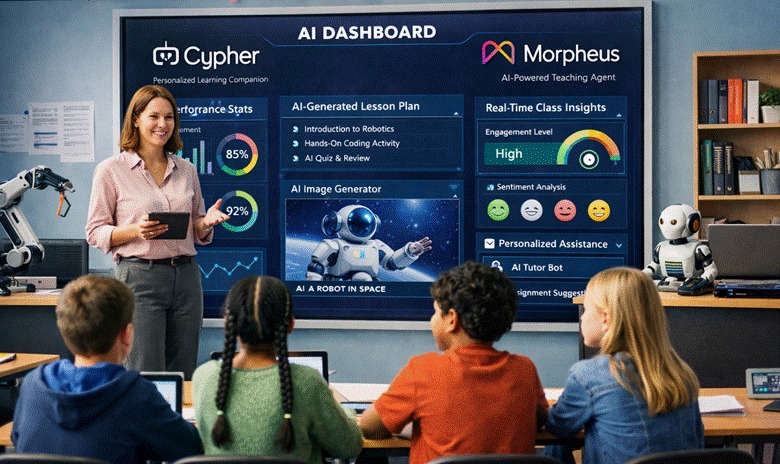
AI tools for lesson planning are like having a super-organized assistant who never sleeps. These tools can generate standards-aligned lesson plans in minutes instead of hours, create differentiated worksheets for different learning levels, handle attendance tracking and grade calculations automatically, and suggest engaging activities based on what has worked with similar classes.
But here's what's really cool: the AI learns from what works. If students in your class respond really well to hands-on projects but zone out during lectures, the AI notices and suggests more hands-on activities. It's like having a teaching mentor who's been observing your class and knows exactly what your students need. Teachers using AI Ready School tools report saving 5-10 hours per week on administrative tasks. That's time they can spend actually connecting with students, planning creative projects, or—imagine this—going home at a reasonable hour.
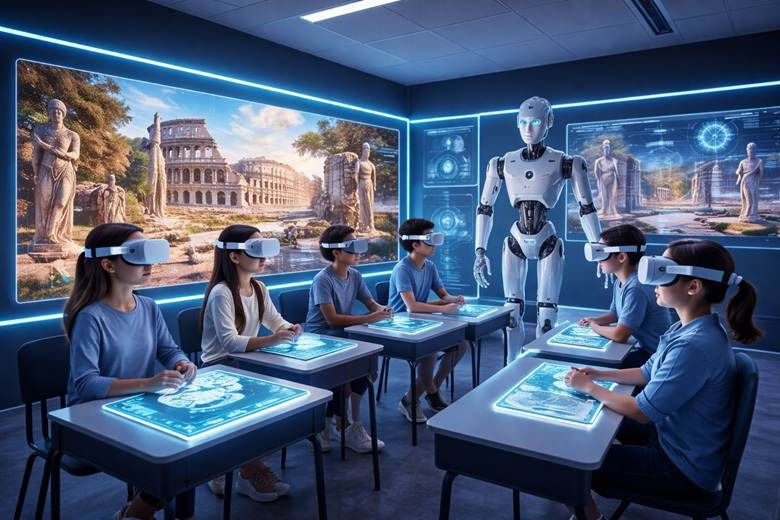
Reading about the Roman Colosseum in a textbook is one thing. Standing in it—even virtually—is something else entirely.
When artificial intelligence in classrooms meets augmented reality and virtual reality, magic happens. Students can walk through ancient civilizations and see history come alive, explore inside a human cell or zoom out to the edge of the universe, conduct virtual chemistry experiments that would be too dangerous or expensive in real life, and play math games where difficulty adjusts in real-time based on their performance.
This isn't just about making learning 'fun' (though it definitely is). It's about creating experiences that stick. Students remember what they experience. When you've 'visited' the Great Wall of China in VR, you don't just know it's long—you understand its scale in a way that pictures never convey. Gamification adds another layer. AI-powered educational games adapt to each player's skill level, keeping them in that sweet spot where they're challenged but not frustrated.
Picture this: A student who just moved from another country sits in class, trying to follow along but missing most of what's being said. Meanwhile, a student with a hearing impairment struggles to catch every word. And a student with dyslexia stares at a dense paragraph, feeling overwhelmed.
Modern EdTech solutions are breaking down these barriers. Real-time translation creates subtitles during lessons in dozens of languages. Speech-to-text captures everything being said for students who need to read rather than hear. Text-to-speech reads aloud any written material at whatever speed works best. Visual aids and diagrams are automatically generated for concepts that are hard to explain in words.
An English teacher can give a lesson while students who speak Hindi, Spanish, or Arabic see real-time translations in their native language. They're all learning together, just in different languages. This is AI in education at its best—not replacing human connection but making it possible where it wasn't before.
If you think today's AI applications are impressive, buckle up. The future of learning is going to blow your mind.
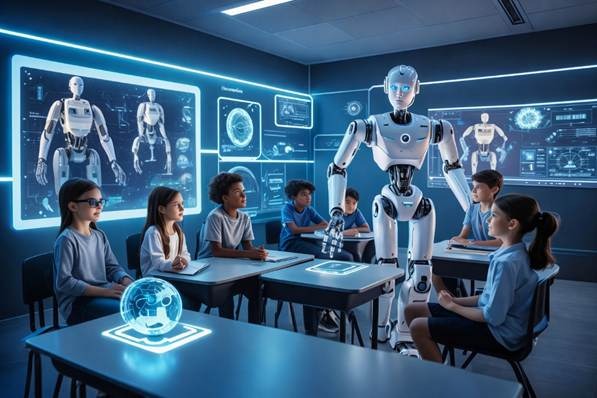
Imagine having a mentor who's known you since kindergarten. They remember that you struggled with fractions in third grade but loved dinosaurs so much you became an expert. They know you learn best with visual examples and tend to give up when things get hard too quickly. They've watched your interests evolve from construction toys to architecture to sustainable design.
Now imagine that mentor can help guide your learning throughout your entire life—not just through high school, but through college, career changes, and lifelong learning. That's where AI mentors are headed.
These future AI companions won't just help with homework. They'll notice patterns in what makes you excited to learn and suggest new areas to explore, recommend career paths that align with your genuine strengths and interests, suggest courses and experiences that fill gaps and build on what you already know, and provide encouragement when you're struggling. It's like having a career counselor, study buddy, and cheerleader all rolled into one—except this one actually knows you inside and out.
What if teachers could know a student was starting to struggle before the student even realized it themselves?
Future AI systems will track subtle patterns: engagement dropping, confidence decreasing, certain topics consistently avoided. The system might notice that Sarah, who usually participates actively, has been quiet for three days and is submitting work later than usual. Maybe she's hitting a rough patch at home, or maybe she's confused about the current topic and too embarrassed to ask.
The AI alerts her teacher, who can check in before Sarah falls too far behind. It's proactive instead of reactive—catching small issues before they snowball into big ones. This represents one of the most valuable benefits of AI for teachers: superhuman observation skills. No teacher can track every subtle signal from every student, but AI can—and then bring the important stuff to the teacher's attention.
Here's an uncomfortable truth: today's students will live in a world saturated with AI. They need to understand it—not just how to use it, but how it works, where it can go wrong, and how to use it responsibly.
Tomorrow's education will include understanding how AI makes decisions (and why those decisions aren't always fair), recognizing bias in algorithms and datasets, thinking critically about AI-generated content like deepfakes and misinformation, and creating AI responsibly and ethically.
Our AI Ready curriculum already includes these elements because we believe students should be creators and critical thinkers, not just consumers. They need to understand AI well enough to question it, improve it, and use it wisely.
There's this fear that AI will replace teachers. But here's what's actually happening: AI is taking over the parts of teaching that machines can do better, freeing teachers to focus on the parts that only humans can do.
Let AI handle the grading, attendance, and basic content delivery. Let teachers focus on having deep conversations about ideas that spark critical thinking, helping students navigate difficult emotions and social situations, modeling ethical reasoning and decision-making, inspiring curiosity and love of learning, and recognizing and nurturing each student's unique potential.
These are the things that make teaching a profession instead of just a job. These are the things that students remember decades later. And these are the things that AI, for all its capabilities, can't replicate. The future of learning doesn't have fewer teachers—it has teachers who are freed up to do what they do best: change lives.
So AI in education sounds amazing. But how do you actually make it happen in your school without it turning into an expensive disaster? Here's the thing: buying a bunch of tablets and calling yourself 'tech-forward' isn't enough. Successfully integrating artificial intelligence in classrooms requires building a complete ecosystem. Think of it like building a garden—you need good soil, water, sunlight, and seeds that work together.
Nothing kills excitement faster than technology that doesn't work. You need internet that doesn't crash when 30 students try to use it simultaneously, enough devices that students aren't fighting over them, and secure storage that protects student data and privacy.
Yes, it costs money upfront. But think of it as investing in infrastructure like you would in libraries or science labs—essential, not optional.
Here's a mistake schools make all the time: they buy expensive software, give teachers a 30-minute intro session, and expect magic to happen. Then they wonder why teachers avoid using the new tools.
Teachers need real support. That's where AI Ready School training comes in. Our programs help educators actually master the tools (not just know they exist), integrate AI naturally into lessons they're already teaching, find the balance between technology and human connection, and address the ethical questions that will definitely come up.
Good training doesn't just show teachers what buttons to push—it helps them reimagine what's possible in their classroom.
AI tools can't just be random add-ons. They need to align with what you're already trying to teach—your standards, your learning objectives, your values.
Our AI Ready curriculum is designed to integrate seamlessly with existing frameworks. We're not asking teachers to throw out everything they know and start over. We're giving them better tools to do what they're already trying to do, plus age-appropriate AI literacy components that build from grade to grade. A third-grader learns about AI differently than a high schooler. The curriculum should reflect that.
.The Bottom Line: This Is Happening. Are You Ready?
Look, we get it. Change is hard, especially in education where we're dealing with kids' futures. The idea of bringing AI into education might feel overwhelming or even scary.
But here's the thing: this transformation is already happening. Schools that embrace AI in education thoughtfully and responsibly are seeing incredible results. Students are more engaged. Teachers are less burned out. Learning is becoming more personalized, more accessible, and honestly, more exciting.
The future of learning isn't about choosing between human teachers and AI. It's about combining the best of both—letting AI handle what it does well so teachers can focus on what makes them irreplaceable.
From personalized learning paths to 24/7 virtual tutors, from automated grading to immersive VR experiences, modern educational technology solutions powered by AI are creating opportunities that didn't exist even five years ago. And the possibilities on the horizon? They're even more exciting.
At AI Ready School, we've made it our mission to help schools navigate this transformation. Our curriculum and training programs aren't just about using technology—they're about using it wisely, ethically, and effectively to create better outcomes for every student.
The question isn't whether AI will transform education. It's already happening. The real question is: will you be part of shaping that transformation, or will you be scrambling to catch up later? Frequently Asked Questions About AI in Classrooms
Got questions? You're not alone. Here are the answers to what everyone's asking about AI in education:
AI in education means using artificial intelligence technologies to make learning better and teaching easier. Right now, it's being used for personalizing lessons for each student's learning style, providing 24/7 homework help through virtual tutors, automatically grading assignments (even essays!), helping teachers plan lessons faster, translating content into different languages instantly, and creating immersive learning experiences with AR and VR. These aren't experimental tools anymore—they're working in real classrooms today.
The biggest benefits of AI for teachers are time and sanity. Seriously. Teachers report saving 5-10 hours per week on grading and administrative work. They get detailed data on each student's progress without having to manually track everything. They can actually provide personalized attention because AI handles the routine stuff. Plus, they get their evenings and weekends back, which means less burnout and more energy for the parts of teaching that actually matter—like inspiring students and building relationships.
AI tools for lesson planning work like having a super-organized teaching assistant. They can generate complete lesson plans aligned with your curriculum standards in minutes. Need materials for three different reading levels? Done. Want activity ideas that match your students' interests? The AI suggests them based on what's worked before. They even help with the tedious stuff like formatting worksheets and creating assessment rubrics. What used to take hours now takes minutes, and the quality is often better because the AI pulls from thousands of proven lesson plans.
No. Full stop. Here's why: AI can deliver content and grade papers, but it can't inspire a kid who thinks they're 'bad at math' to suddenly believe they can do it. It can't notice when a usually chatty student goes quiet because something's wrong at home. It can't model ethical thinking or celebrate a breakthrough moment with genuine joy. Teaching is fundamentally a human profession. What AI does is free teachers from the mechanical parts so they can focus on the human parts—the parts that actually change lives.
This is crucial. Any responsible AI education platform should have robust data protection policies, comply with regulations like FERPA and COPPA, use encryption for data storage and transmission, provide transparency about what data is collected and how it's used, and give schools and parents control over student data. Always ask potential vendors about their privacy policies and security measures. If they can't give you clear, detailed answers, that's a red flag.
Visit AI Ready School today and discover how our training programs and curriculum solutions can help you build an AI-powered learning environment that actually works.
The future of education is here. Let's make it amazing—together
Human First. AI Next.™