Chiranjeevi Maddala
January 15, 2026
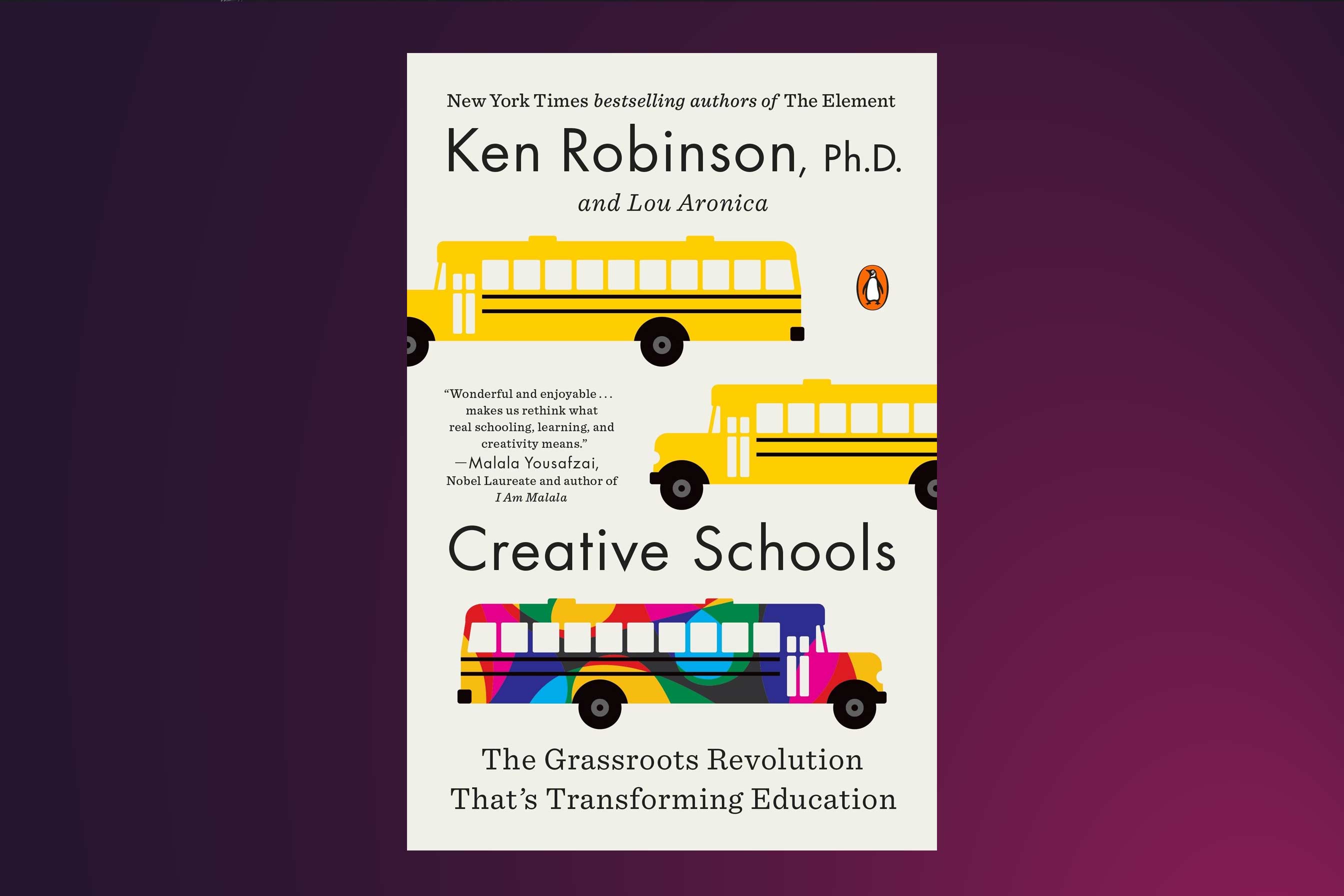
A reflection on finding unexpected validation in "Creative Schools"
I've spent the last few years building AI Ready School with a singular conviction: that education needs to move beyond the assembly-line approach of standardized testing and one-size-fits-all curricula. We've been creating AI-powered learning companions, personalized platforms, and hands-on innovation labs because something felt fundamentally broken in how we approach learning.
But here's what I didn't expect: to pick up a book and discover that one of the world's most respected education thinkers had already articulated, with stunning clarity, exactly what we've been working toward.
That book is "Creative Schools" by Sir Ken Robinson.
When I started reading Robinson's work, I anticipated finding interesting educational theory—perhaps some validation for progressive teaching methods. What I found instead was something far more profound: a detailed philosophical framework that mirrors, almost uncannily, the principles we've embedded into every aspect of AI Ready School.
Robinson's central argument is simple yet revolutionary: our current education system, designed during the Industrial Revolution to produce standardized workers, is fundamentally mismatched to the needs of today's students and tomorrow's world. It's a system, he argues, that "suppresses individuality, imagination, and creativity" through its obsession with standardization and conformity.
Sound familiar? It should. This is precisely the problem we set out to solve. I also checked his famous TED Talk - "Do schools kill creativity?" which he gave 19 years ago.
One of Robinson's most powerful insights comes from his comparison of education to farming. He contrasts industrial farming—focused on maximizing yield through monoculture, chemical inputs, and standardization—with organic farming, which nurtures the soil, respects ecosystems, and recognizes that health comes from diversity and balance.
Traditional education, he argues, follows the industrial farming model: same curriculum for everyone, same pace, same assessments, same outcomes expected. The result? Like degraded topsoil and polluted ecosystems, we get disengaged students, stressed teachers, and young people who've lost touch with their natural curiosity and creativity.
When I read this metaphor, I immediately thought of our Knowledge Engineering approach at AI Ready School. We don't try to pour the same information into every student's head. Instead, we create rich learning ecosystems where:
We're nurturing the soil, not just optimizing for test score yield.
Robinson articulates four principles of what he calls "organic education," adapted from organic farming principles:
Reading these, I had to pause. This isn't just alignment—it's almost a blueprint for what we've been building.
Our AI learning companions don't just teach content; they nurture curiosity, respond to emotional states, and adapt to individual circumstances. Our platform doesn't isolate subjects; it shows connections and interdependencies. Our mission has always been to democratize access to personalized learning, ensuring every student can develop their unique potential.
Robinson writes powerfully about how children are "naturally creative, deeply curious" learning organisms, but that traditional schooling systematically crushes this natural drive. He quotes teachers who understand that "one size fits all doesn't work" and describes educational approaches that "harness that natural learning ability."
This resonates deeply with our approach to AI in education. We're not trying to replace teachers or automate learning—we're trying to amplify what great teachers have always done: spark curiosity, provide personalized guidance, and create environments where students want to learn.
When a student interacts with Cypher or uses ZION to explore a topic that fascinates them, they're not being force-fed standardized content. They're following their curiosity, with an AI companion that adapts to their pace, answers their questions, and helps them make connections.
Perhaps most importantly, Robinson champions what he calls a "grassroots revolution"—transformation that happens school by school, teacher by teacher, rather than waiting for top-down systemic change. He celebrates educators who are "pressing for changes" and "moving in the same direction" despite resistance from standardization-focused systems.
This is exactly how we see AI Ready School's role. We're not trying to mandate change from above. We're providing tools that empower individual schools, teachers, and students to transform their own learning experiences. Every NEO AI Lab we install, every teacher we train, every student who discovers their passion through our platforms—that's the grassroots revolution in action.
Finding this alignment with Robinson's vision isn't just personally validating—it's strategically important. It tells us that:
Robinson notes that traditional education reform—trying to improve the industrial model through more standardization and testing—is like "racing to where the puck is rather than where it's going to be." AI Ready School is skating toward where education needs to go: personalized, curiosity-driven, creativity-nurturing, and human-centered.
Reading "Creative Schools" has reinforced my conviction that what we're building at AI Ready School isn't just useful—it's necessary. Robinson's work provides the philosophical foundation; our AI-powered tools provide the practical means.
We're creating the technology that enables organic education at scale. We're building the platforms that let teachers nurture rather than standardize, that help students discover rather than just memorize, that cultivate curiosity rather than compliance.
As Robinson writes, "The fact is that our children and our communities need a different sort of education, based on different principles from those that are driving the standards movement."
At AI Ready School, we're not just agreeing with that statement—we're building it.
Have you read "Creative Schools"? What aspects of Robinson's vision resonate most with your educational experiences? I'd love to hear your thoughts. Share your thoughts, or reach out to share how you're part of this grassroots revolution in education.
Let's talk about making your school an AI Ready School