
Chiranjeevi Maddala
March 30, 2026
Your students are already using ChatGPT. The question is not whether to allow AI in your school. The question is whether the AI your students use was built for them or for someone else entirely—and what the difference means for their learning, safety, and development.
Let us start with what ChatGPT is. It is a general-purpose large language model built by OpenAI for adult professional use. It is extraordinarily capable. It can write codes, draft legal documents, analyse financial data, generate marketing copy, and answer almost any question with fluency and confidence. It was built by some of the most talented engineers in the world, and it is genuinely impressive technology.
It was not built for your students.
It was not designed with a Class 7 student in mind. It has no curriculum alignment with CBSE, ICSE, or any Indian state board. It has no memory of your student's previous learning sessions. It has no understanding of where your student is in the syllabus, what they already know, or where their conceptual gaps are. It has no safety guardrails designed specifically for children. It has no mechanism for ensuring that a student's interaction with it builds understanding rather than bypasses it. And it has no connection to their teacher, their school, or their learning goals.
A 2026 Pew Research survey found that nearly 60% of teens report that students in their school frequently use AI tools to complete academic work. Studies indicate that 94% of AI-generated academic submissions went undetected when students submitted them as their own work. In January 2026, Denver Public Schools blocked student access to ChatGPT over child safety concerns. Boulder Valley Schools followed. OpenAI has been updating its teen safety policies throughout 2025 and into 2026 in response to documented incidents involving students.
These are not arguments against AI in education. They are arguments for the right AI in education. Here are six fundamental differences between ChatGPT and Cypher, our personalised AI learning companions for K-12 students, and why every one of them matters for your students.
This is the most important difference, and it runs deeper than a feature comparison. It reflects a fundamental disagreement about what AI in education should do.
When a student asks ChatGPT a question, ChatGPT answers it. Completely, fluently, and immediately. The student receives a well-structured response that addresses their question, and the interaction is over. What the student does with that answer is entirely up to them. ChatGPT has no interest in whether the student understood the answer, whether they could apply it to a different context, or whether they will remember it in three weeks.
This is entirely appropriate for an adult professional tool. An adult using ChatGPT to research a topic, draft a document, or solve a technical problem does not need the AI to quiz them on their understanding. They need the information. ChatGPT provides it.
A student learning a concept needs something categorically different. They need to construct understanding inside their own minds through cognitive effort. Stanislas Dehaene, a cognitive neuroscientist, conducted research that is unambiguous: genuine learning requires active engagement, error feedback, and consolidation through distributed practice. When a student receives a complete answer, none of these conditions are met. The brain stores the information weakly and temporarily. The understanding that would allow the student to apply, analyse, and evaluate the concept never develops.
Cypher is designed around this research. When a student asks Cypher about photosynthesis, he does not explain it. It asks: "What do you already know about how plants get their energy?" This creates a moment of productive uncertainty, directing the student's attention to the specific gap that requires filling. It asks questions that lead the student through a reasoning process that ends with understanding they constructed themselves. The answer the student arrives at is far more durable than any answer Cypher could have delivered directly.
The ChatGPT approach:
Student: "What is photosynthesis?"
ChatGPT: "Photosynthesis is the process by which plants use sunlight, water, and carbon dioxide to produce oxygen and energy in the form of sugar. The process takes place in the chloroplasts of plant cells, specifically using a green pigment called chlorophyll..." [continues for three paragraphs]
Time taken: 30 seconds. Understanding developed: minimal. Retained after one week: unlikely.
The Cypher approach:
Student: "What is photosynthesis?"
Cypher: "Before we dive in, tell me what you already know about how plants stay alive. What do you think they need to survive?"
Student: "Sun and water?"
Cypher: "Good start. Now think about this: you need food to get energy. How do you think a plant gets its energy if it cannot move around and eat?"
The student thinks. They engage. They construct a hypothesis. Cypher guides them through a discovery process that ends with genuine understanding of photosynthesis built on the student's own reasoning. Time taken: 15 minutes. Understanding developed: genuine. After one week, retention is far more likely.
ChatGPT is optimised for the quality of the answers it produces. Cypher is optimised for the quality of the thought the student produces. These are not the same goal, and they produce very different outcomes.
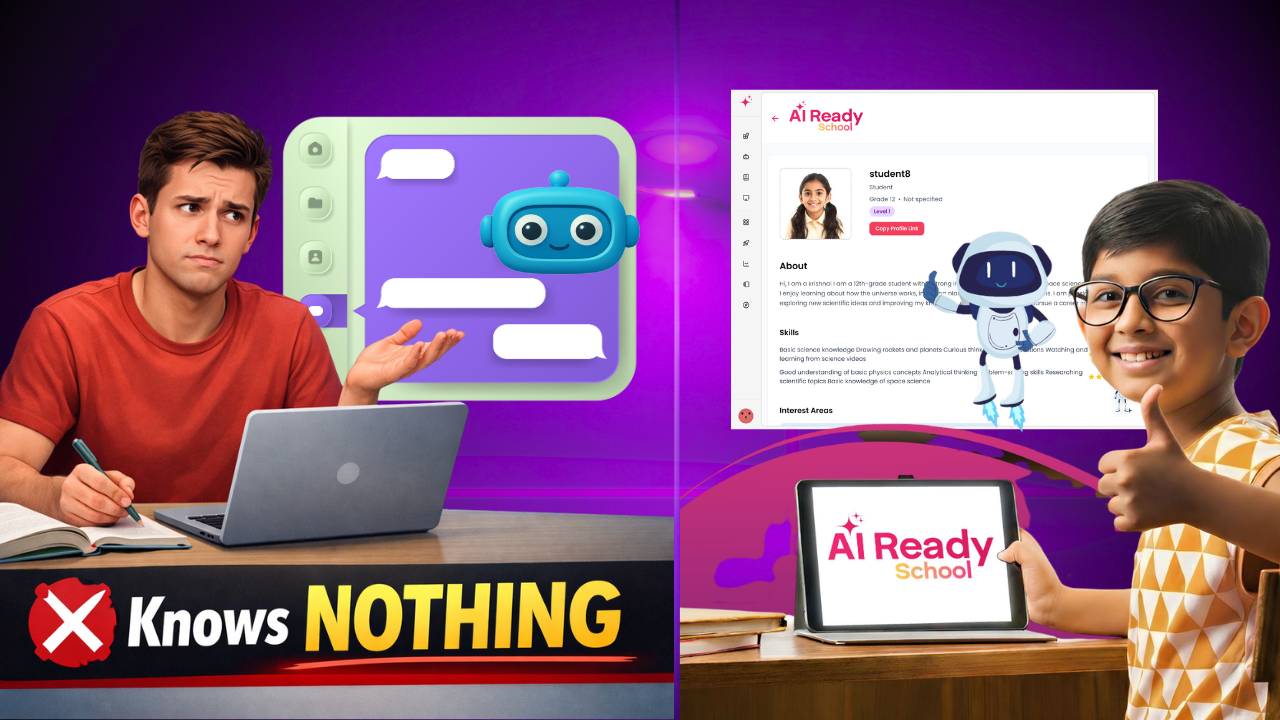
Every conversation with ChatGPT begins from zero. ChatGPT has no memory of previous conversations (unless explicitly configured otherwise, which school students typically do not do). It does not know your student's name, their grade, their board, their current chapter, what they studied last week, where they are struggling, or what their learning goals are. Every interaction is a fresh start with a stranger.
This is a fundamental limitation for educational use. A student who asks ChatGPT about algebraic equations on Monday and returns on Thursday to ask about quadratic functions gets the same generic response as any other user. ChatGPT does not know that this student has a specific gap in their understanding of factorisation that is going to make quadratic functions difficult. It is not known that this student responds better to concrete examples than abstract explanations. It is not known that this student has been struggling with mathematics for two months and needs encouragement along with instruction.
Cypher maintains a persistent, continuously updated 360-degree profile of each student across four dimensions: knowledge, learning style, cognitive behaviour, and skills. This profile starts with the first interaction and deepens with each subsequent session across all subjects and academic years.
When a student returns to Cypher on Thursday to ask about quadratic functions, Cypher already knows that this student has a gap in factorisation. It has observed their preference for concrete examples. It has noted their improving confidence over the past two months. It adjusts its approach accordingly before the student has said a word. The interaction is not generic. It is personally calibrated for this student at this specific moment in their learning journey.
This is not just a better experience. It is a fundamentally different educational outcome. The research on personalised learning consistently shows 20 to 40% improvements in learning outcomes compared to uniform instruction. The Raipur case study, which documented outcomes from students using Cypher, showed a 34% improvement in final class scores and a 77% improvement in analysis-level cognitive tasks. These outcomes are produced by personalisation that is only possible because Cypher knows the student.
This difference is not about capability. It is about design intent, safety architecture, and the specific requirements that children's use creates.
ChatGPT was designed for adult professional and personal use. Its content policies are calibrated for adults. Its data handling practices are designed for adult users who have legal capacity to consent to those practices. Its interaction design is optimised for adults who know what they want and can evaluate what they receive.
Children are not small adults. They require different content policies, different data protections, different interaction design, and different safety architectures. They cannot meaningfully consent to data practices. They are more vulnerable to inappropriate content. They are less equipped to evaluate the accuracy and appropriateness of AI outputs. They are more susceptible to the dependency patterns that answer-first AI creates. And their data, which includes information about their learning struggles, their gaps, their behavioural patterns, and their developing interests, requires protections that adult consumer privacy frameworks were not designed to provide.
Denver Public Schools' January 2026 decision to block ChatGPT was specifically triggered by concerns about a new group chat feature and the addition of adult content capabilities. Boulder Valley Schools cited easily skirted age verification, opaque group chats, and the ability to generate content that was inappropriate for children. OpenAI has been responding to scrutiny after documented incidents of teenagers being harmed through prolonged AI interactions.
Cypher was built for K-12 students from day one. Every element of its design reflects this:
• Content safety: Cypher's content filters are specifically calibrated for K-12 students, not derived from adult content policies with age restrictions bolted on. Content that is inappropriate for a 10-year-old is never generated, regardless of how the student frames the request.
• Data protection: Student data processed by Cypher stays within the school's infrastructure when deployed with Matrix, our sovereign AI infrastructure product. No student data is sent to external servers for model training. No data is used for advertising or profiling.
• Interaction design: Cypher's questioning-first approach was specifically designed to counter the dependency patterns that answer-first AI creates in children. Every interaction is designed to build independence, not foster reliance.
• Teacher visibility: Every student interaction with Cypher is visible to teachers through the Morpheus dashboard. Parents receive regular progress reports. Nothing happens in a black box.
• Parental control: Parents can set learning goals that guide Cypher's interactions with their child. They can see what topics their child has been engaging with, where they are struggling, and how their understanding is developing.
A tool designed for adults, used by children, with adult content policies and adult data practices, is not an AI learning companion. It is a liability.
When a teacher prompts ChatGPT to create a lesson plan for "photosynthesis, Grade 7, CBSE", the output is generic. It does not know the specific CBSE textbook. It does not know where the class currently is in the academic calendar. It does not know which prerequisites the teacher has already covered. It does not know the teacher's preferred instructional approach or the assessment framework the school uses. Every interaction requires the teacher to provide this context from scratch, and the AI has no way to verify that the context is accurate or complete.
For students, this generic quality has even more serious consequences. A student using ChatGPT to study for their Class 10 CBSE board examination is receiving content that has not been specifically aligned with the CBSE curriculum, the NCERT textbooks, or the specific question patterns that the board examination uses. The student may be studying content that is technically correct but not relevant to what they will actually be assessed on.
Cypher is aligned with CBSE, ICSE, and major state board curricula. It knows which topics appear in which chapters of the relevant textbooks. It knows the cognitive levels at which the board examinations typically assess each topic. It knows the common misconceptions that students develop about each concept in each subject. When a Class 10 CBSE student asks Cypher about heredity and evolution, Cypher's questions and scaffolding are calibrated to the specific requirements of their board curriculum, not to a generic understanding of the topic.
The Morpheus integration deepens this curriculum alignment. When a teacher creates a lesson plan through Morpheus, specifying the board, subject, grade, and chapter, the content that Morpheus generates is immediately aligned with Cypher's understanding of what that student needs. When the student subsequently studies with Cypher, Cypher's interactions build on and reinforce what their teacher taught, rather than introducing generic content that may or may not align with the classroom instruction the student has received.
ChatGPT exists as one more tab in a browser, entirely disconnected from everything else in a school's educational environment. The lesson plan a teacher generates in ChatGPT has to be manually copied into the school's learning management system. The answer a student receives from ChatGPT has no connection to what their teacher taught that morning. The school has no visibility into what students are asking, what answers they are receiving, or what impact their ChatGPT interactions are having on their learning.
Schools already suffer from tool fragmentation — separate platforms for attendance, grading, communication, content, and assessment, none of which talk to each other. Adding ChatGPT does not solve this problem. It adds another silo, the most consequential silo, because it is the one students are using most frequently and the one the school has least visibility into.
Cypher is a native component of the AI Ready School ecosystem. The lesson a teacher creates through Morpheus automatically appears in the student's Cypher companion. The assessment results from a student's Cypher practice session feed directly into the teacher's dashboard. The signals from Cypher's interactions with students inform the Zion tool recommendations the student receives. The skills a student develops in the NEO AI Innovation Lab feed back into their 360-degree profile in Cypher. Everything is connected. Nothing is siloed.
For IT coordinators and technology-decision makers, this integration is not just operationally convenient. It is the prerequisite for the data governance, student safety, and outcome measurement that responsible AI implementation requires. A school cannot govern what it cannot see. ChatGPT is invisible to the school. Cypher is fully integrated into it.
The cost objection is real and deserves a direct answer. ChatGPT's consumer version is free, and that is a genuinely significant advantage for schools operating under budget constraints. We acknowledge it.
But free in this context means that the product's cost is being recovered through other means. OpenAI's business model depends on the data generated by user interactions and on enterprise subscriptions. When students use ChatGPT for free, their interactions, which include information about their learning struggles, their gaps, their questions, and their developing understanding, contribute to a data asset that OpenAI controls and monetises. The student is not the customer. The student is the product.
Beyond the data question, the cost of the ChatGPT approach in schools is not the subscription fee. It is the cost of teacher time spent prompting, editing, and reformatting generic outputs. It is the cost of student learning opportunities lost because generic responses do not match individual needs. It is the cost of assessment integrity eroded as students learn to use AI for answers rather than understanding. It is the cost of safety incidents that go undetected because there is no monitoring of student interactions. These costs are real, they are substantial, and they are invisible in any budget that only tracks software expenditure.
Our NEO AI Innovation Labs and Cypher are priced to be accessible for Indian schools at various resource levels, with flexible implementation options that allow schools to begin with the components that address their most pressing needs. When these hidden costs are calculated, the question shifts from "can we afford Cypher?" to "can we afford the long-term cost of not using the right tool?"
The most persuasive case for Cypher over ChatGPT is not our comparison table. It is what teachers, parents, and school leaders say after they have seen both in practice.
Vrishali Nalte, TGT Science Teacher, NH Goel World School, Raipur: "My students were using ChatGPT before we adopted Cypher. I could tell because their homework was polished but they could not answer basic questions in class. After six months with Cypher, the classroom conversations are completely different. Students come in having actually thought about the material. They ask questions that show they were trying to understand, not just produce an answer."
Jayesh Agrawal, PGT Physics Teacher, Brighton International School, Raipur: "The integration with Morpheus changed my lesson planning and my student tracking simultaneously. I know what each student has been working on with Cypher before I walk into class. I can adjust my lesson based on real data, not guesswork. ChatGPT could never have given me that."
Ankit Ahuja, PGT Mathematics Teacher, Ryan International School, Raipur: "The first thing that struck me about Cypher was that it asks questions. My weakest students, the ones who had been using ChatGPT to copy answers, started engaging differently. They had to think. Some of them found it frustrating at first. That frustration was the learning happening."
These observations align precisely with what the data from our Raipur implementation showed: a 34% improvement in final class scores, a 57% improvement in application-level cognitive tasks, and a 77% improvement in analysis-level cognitive tasks, from students who previously had no access to personalised AI learning support.
For tech-savvy principals: the question is not whether to allow AI in your school. Your students are already using it. The question is whether the AI they use is visible to you, aligned with your curriculum, safe for your students, and connected to your teaching and assessment processes. ChatGPT is none of these things. Cypher is all of them. The IT argument for Cypher is not just pedagogical. It is a governance and risk management argument. A school that knows what AI its students are using and how it is affecting their learning is in a fundamentally different position from one that is aware of the problem but has no visibility into it.
For IT coordinators: Cypher's deployment through Matrix gives you the data sovereignty, access control, and monitoring capability that consumer AI tools cannot provide. Student data stays on campus. Teacher access is role-based and auditable. Parent visibility is configurable. Security standards are documented and verifiable. The integration with Zion and Morpheus means you are managing a single connected ecosystem rather than a proliferation of consumer tools with separate data policies and separate access management requirements.
For parents: the most important question to ask about any AI tool your child uses is not whether it produces impressive outputs. It is whether those outputs are building your child's capacity to think independently, or substituting for it. ChatGPT produces impressive outputs and builds dependency. Cypher produces less immediately impressive outputs and builds capability. Over time, that difference compounds in ways that will be visible in your child's examination performance, their confidence with difficult problems, and their readiness for the kind of higher-order thinking that university and career demands will require.
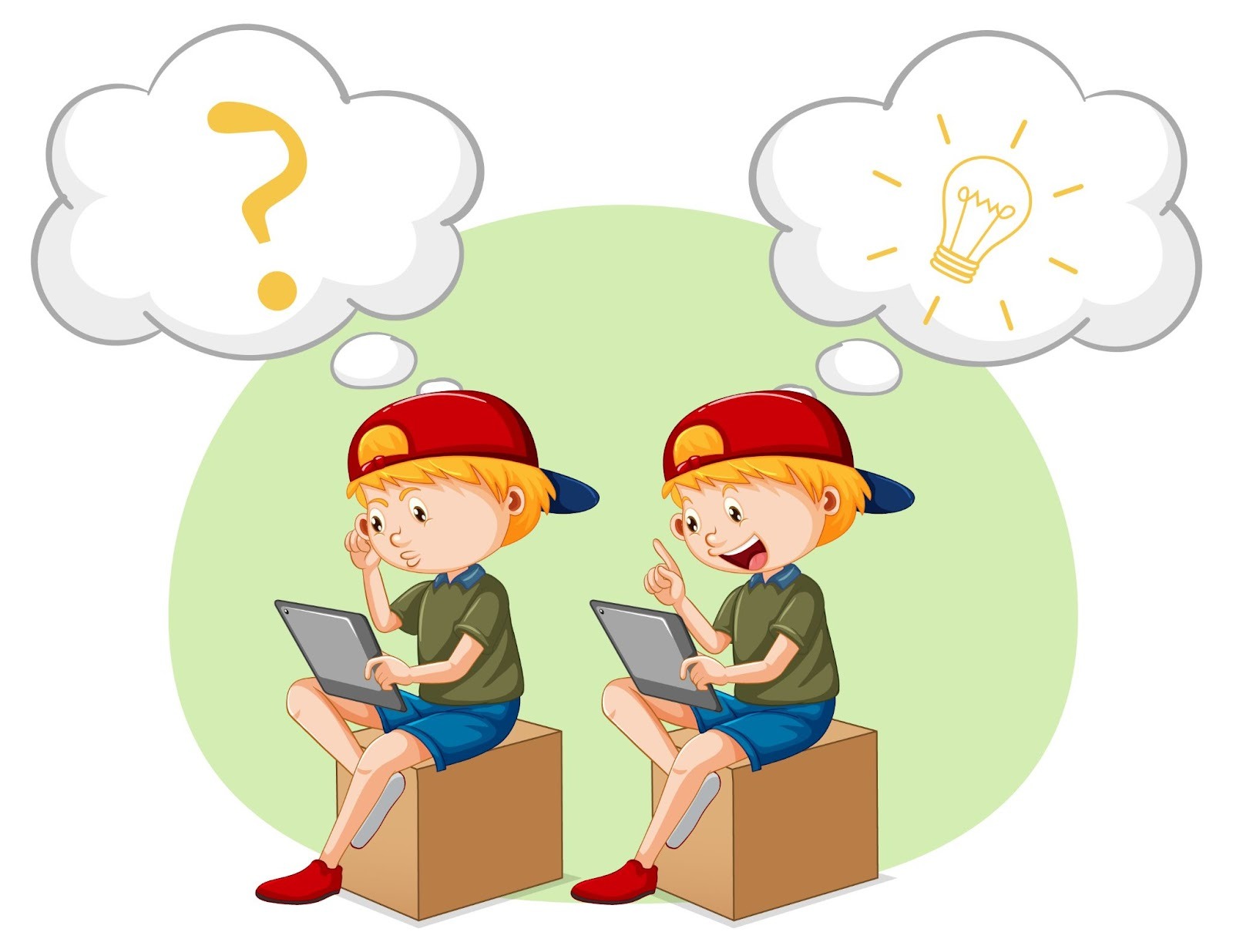
We are not arguing that ChatGPT is a bad product. It is an excellent product for its intended purpose. Adult professionals using it for research, drafting, analysis, and problem-solving have access to a genuinely remarkable tool that makes them more productive.
We are arguing that it is the wrong tool for students. Not because it is too powerful, but because it was designed for a fundamentally different use case. It answers when students need to question. It delivers when students need to discover. It forgets when students need to be remembered. It standardises when students need to be personalised. It operates in a black box when schools need visibility. It was built for adults, and children are using it.
The consequences of this mismatch are not immediately visible. In the short term, students using ChatGPT produce more polished work with less effort. Teachers see better-looking assignments. Parents see completed homework. The school reports improved productivity. And underneath this surface improvement, the cognitive development that education is supposed to produce is quietly not happening. The understanding that should be building is not being built. The thinking capacity that should be strengthening is being bypassed. The dependency patterns that will limit these students at the next level of their education are being established.
This is the gap that only becomes visible later, at the transition from secondary to higher secondary education, where the complexity of material demands genuine understanding rather than examination technique. At the transition from school to college, where professors do not structure learning the way school curricula do and students must drive their own comprehension. At the beginning of careers, where the ability to reason through novel problems is the competency that determines advancement and the ability to retrieve information is available to everyone with a search engine.
Cypher was built for one purpose: to be the best possible AI learning companion for K-12 students. Every design decision, from the questioning-first interaction model to the curriculum alignment, from the 360-degree student profile to the teacher dashboard integration, from the child safety guardrails to the sovereign data infrastructure, reflects that single purpose.
The difference between a learning companion and a chatbot is not a feature difference. It is a purpose difference. And for the children in your school, that purpose difference is the difference between technology that develops them and technology that does their work for them.
India has 260 million school enrolments. The AI tools those students use in the next five years will shape not just their examination performance but the thinking capabilities they carry into adulthood, their relationships with knowledge and uncertainty, and their readiness for the demands that an AI-shaped world will place on them. That is not a choice to make by default. It is a choice to make deliberately, with full understanding of what each option actually is.
Your students deserve an AI that was built for them. Not an AI that was built for someone else and is being used by them anyway.
To see how Cypher works with your students and to understand concretely why the difference between a learning companion and a chatbot matters for the children in your school, we invite you to Schedule a Call.
with our team.
AI Ready School provides a complete AI ecosystem for K-12 schools, including Cypher (personalised AI learning companion), Morpheus (AI teaching agent), Zion (safe AI tool suite), NEO (AI Innovation Labs), and Matrix (sovereign AI infrastructure). All designed from the ground up to make children think, not to think for them.
To explore how Cypher works across your school, schedule a demo at hey@aireadyschool.com or call +91 9100013885.
Human First. AI Next.™

.png)