
Jai Kumar Relwani
March 31, 2026
For decades, classrooms around the world have followed a familiar pattern: the teacher explains, students listen, notes are copied, and assessments measure how accurately procedures are reproduced.
This model has endured not because it is optimal—but because it is efficient.
Yet more than half a century of cognitive science tells us something fundamentally different: learning is not a passive process. It is constructed through active engagement, explanation, and reflection.
Jean Piaget’s constructivist theory established that children do not simply absorb knowledge; they build it by reorganizing their mental models through experience (Piaget, 1970). Lev Vygotsky later showed that this process is strengthened through social interaction—when learners explain ideas, question each other, and operate within what he called the Zone of Proximal Development (Vygotsky, 1978).
In simple terms: students learn best when they think, explain, and teach—not when they only listen.
The emergence of artificial intelligence in education raises an urgent question:
Will AI reinforce passive learning—or finally enable classrooms built around how students actually learn?
A recent classroom intervention in a Grade 7 mathematics classroom offers an important clue.
At SAGES BP Pujari School, Raipur, an innovative classroom intervention explored this very question. Led by AI Ready School, the project integrated a Flipped Classroom model with Cypher, an AI-powered personalized learning companion. The goal was simple but transformative:
How can technology, when used purposefully, enable students to take greater ownership of their learning?
The results were powerful — including a 34.5% overall improvement in performance and a 77.9% increase in higher-order thinking skills.
Let’s explore how it unfolded.
A Simple but Radical Shift: Students Were Asked to Teach
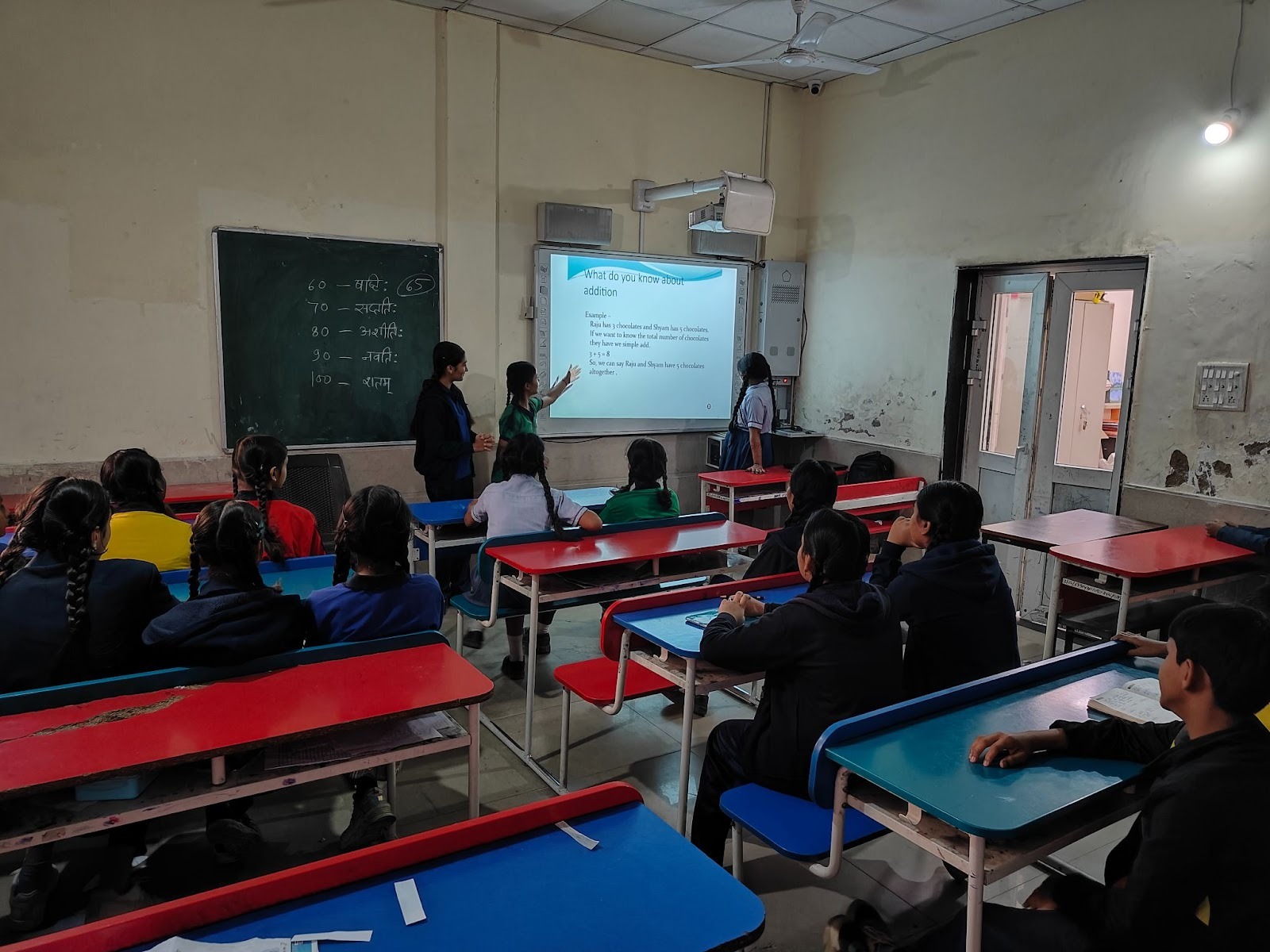
Instead of beginning with lectures, students were divided into groups and assigned sub-topics from the chapter Decimal Representation of Rational Numbers. Their responsibility was not merely to learn—but to teach. They were required to:
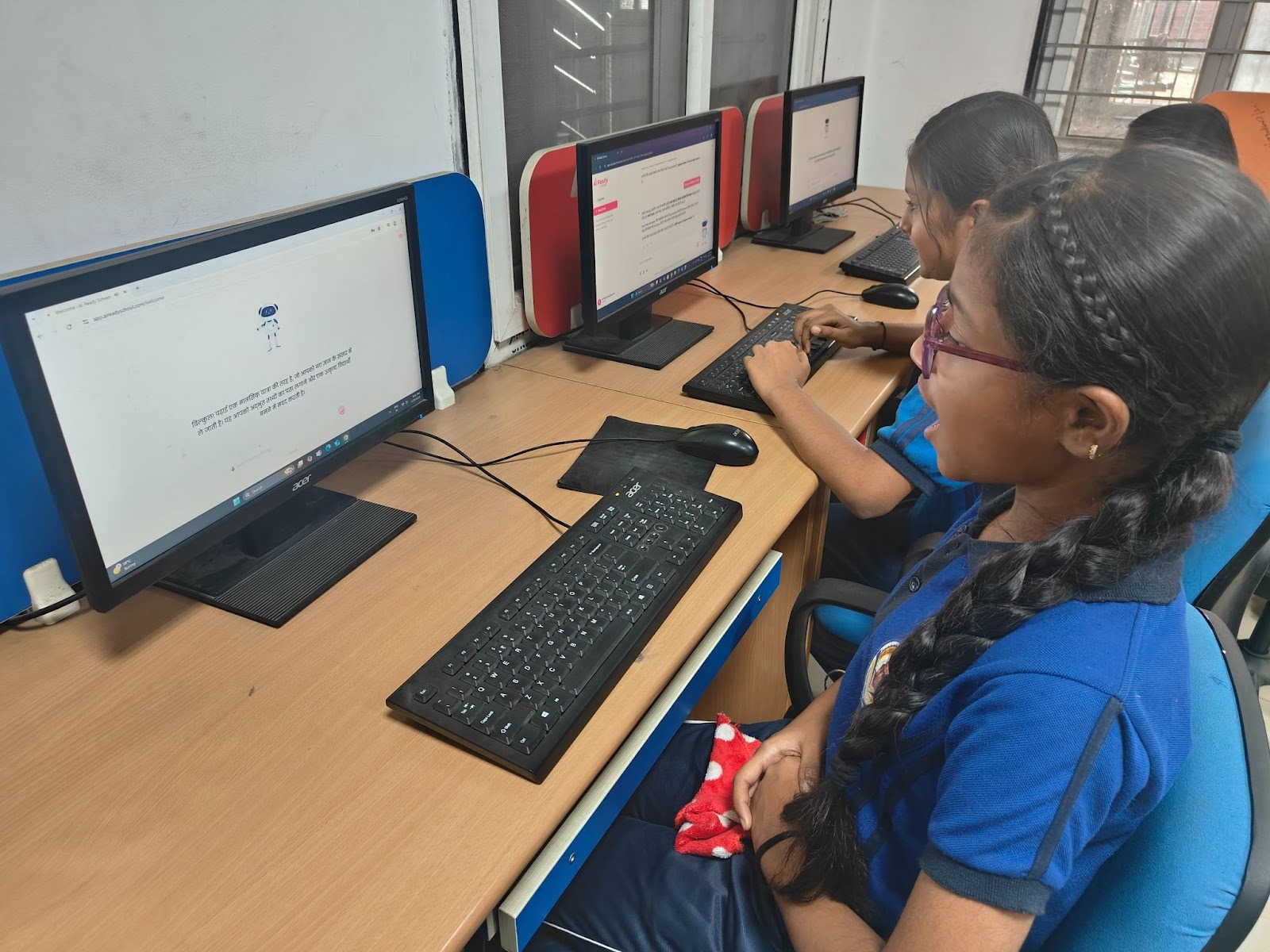
Technology was not used for content consumption. Instead, Cypher was positioned as a learning companion that helped students:
The teacher’s role shifted from content deliverer to facilitator—guiding accuracy, supporting collaboration, and ensuring responsible AI use.
This structural shift reflected Jerome Bruner’s principle that effective teaching is not about delivering information, but about designing environments where learners actively construct understanding (Bruner, 1961).
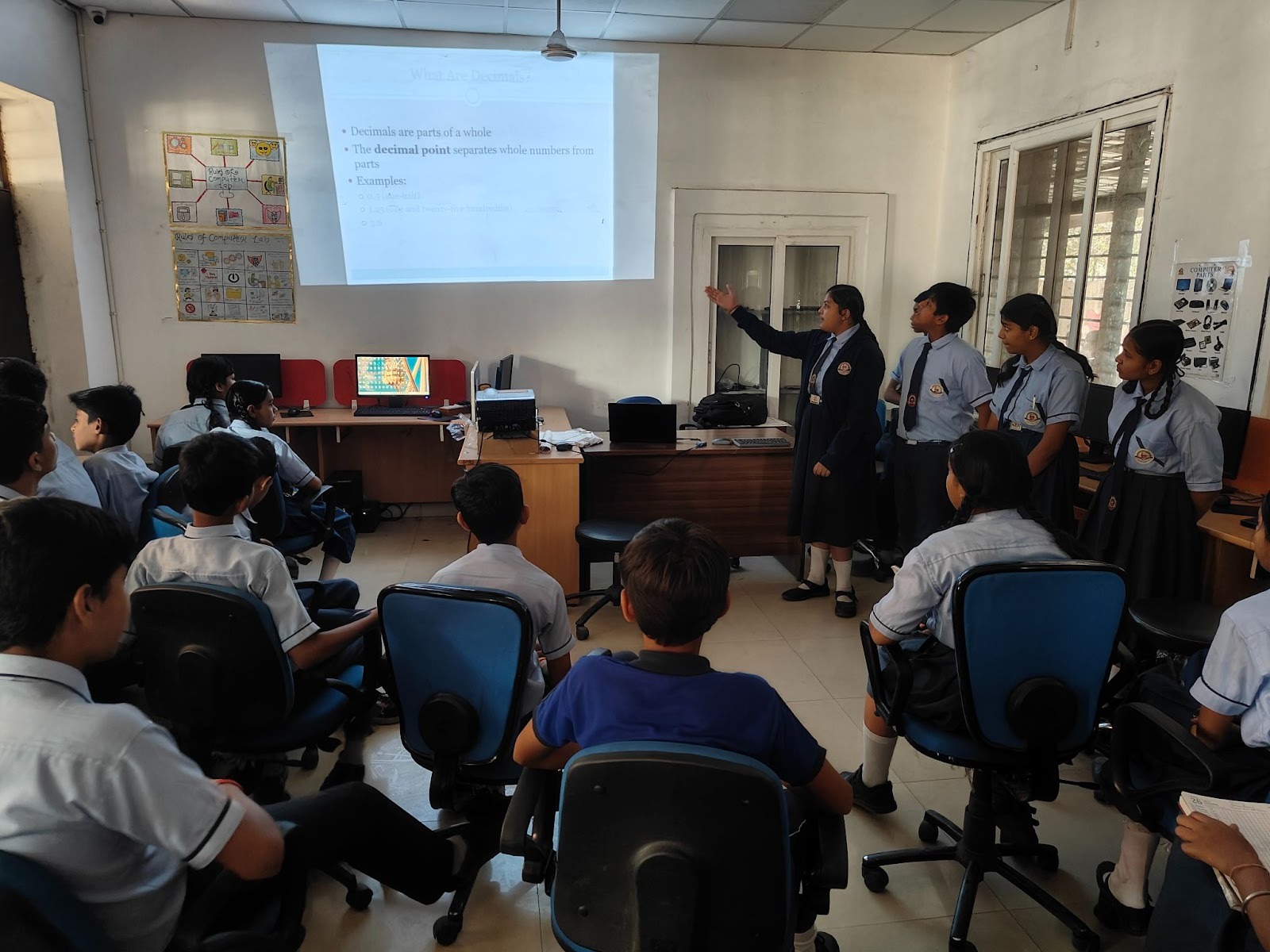
Benjamin Bloom’s taxonomy distinguished between lower-ordercognitive tasks such as remembering and higher-order tasks such as applying andanalyzing (Bloom, 1956). Traditional instruction often emphasizes the former.
But when students prepare to teach, they must:
These processes activate higher-order cognition.
Modern research confirms this “learning-by-teaching” effect.Students who explain concepts to others demonstrate deeper conceptualunderstanding and longer retention than those who study passively (Fiorella& Mayer, 2013).
In the classroom intervention, this shift was visible almostimmediately.
Students began dividing responsibilities, rehearsing explanations,and challenging each other’s reasoning. As one student reflected:
“I honestly couldn’t imagine myselfstanding up and explaining a presentation to the whole class. I was so nervousat first, but once I started, my fear disappeared.”
Confidence emerged not from instruction—but from responsibility
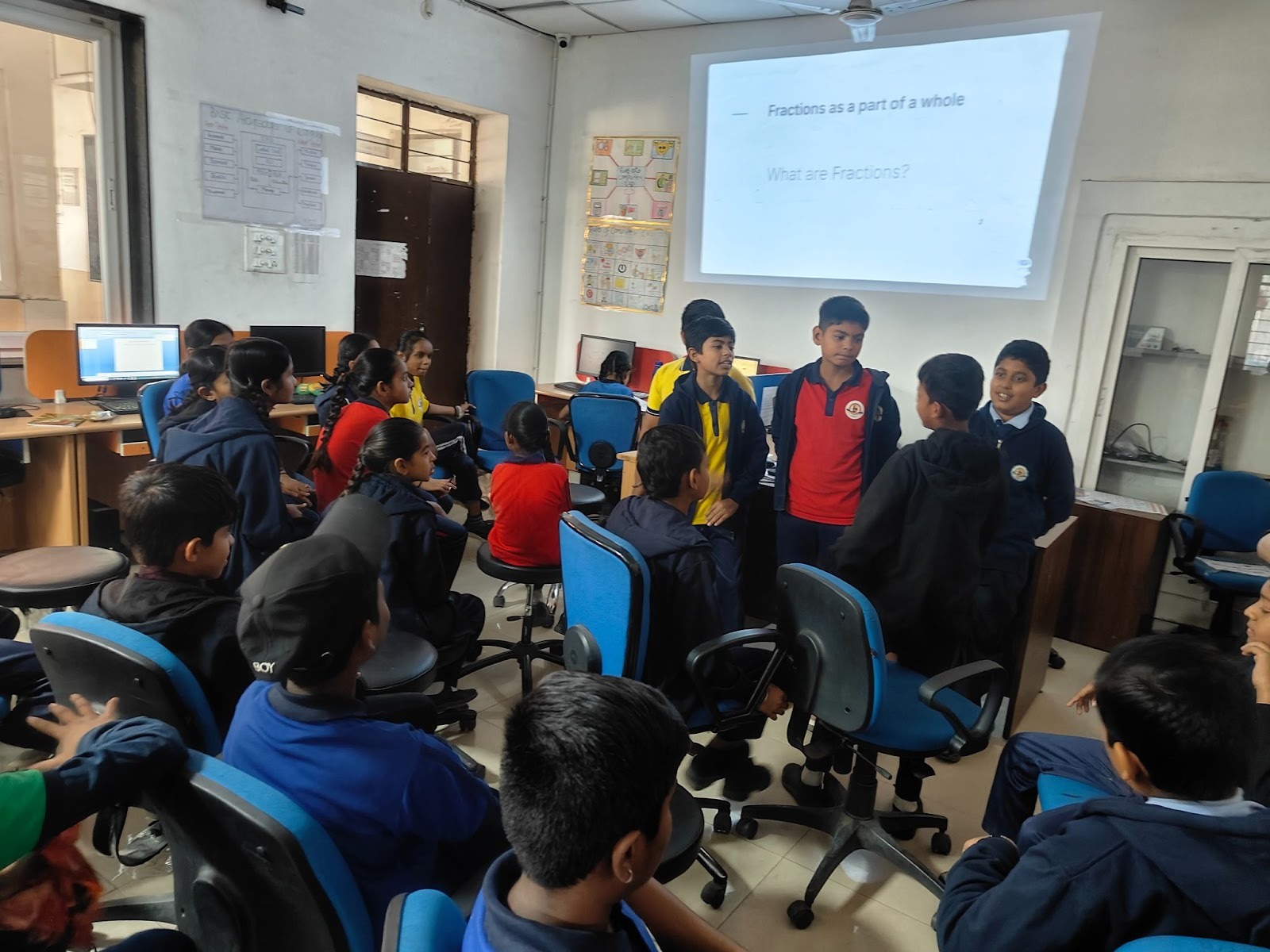
The success of the project lay in its structured design. It followed a clearly defined learning cycle:
This structure ensured clarity, accountability, and measurable impact.
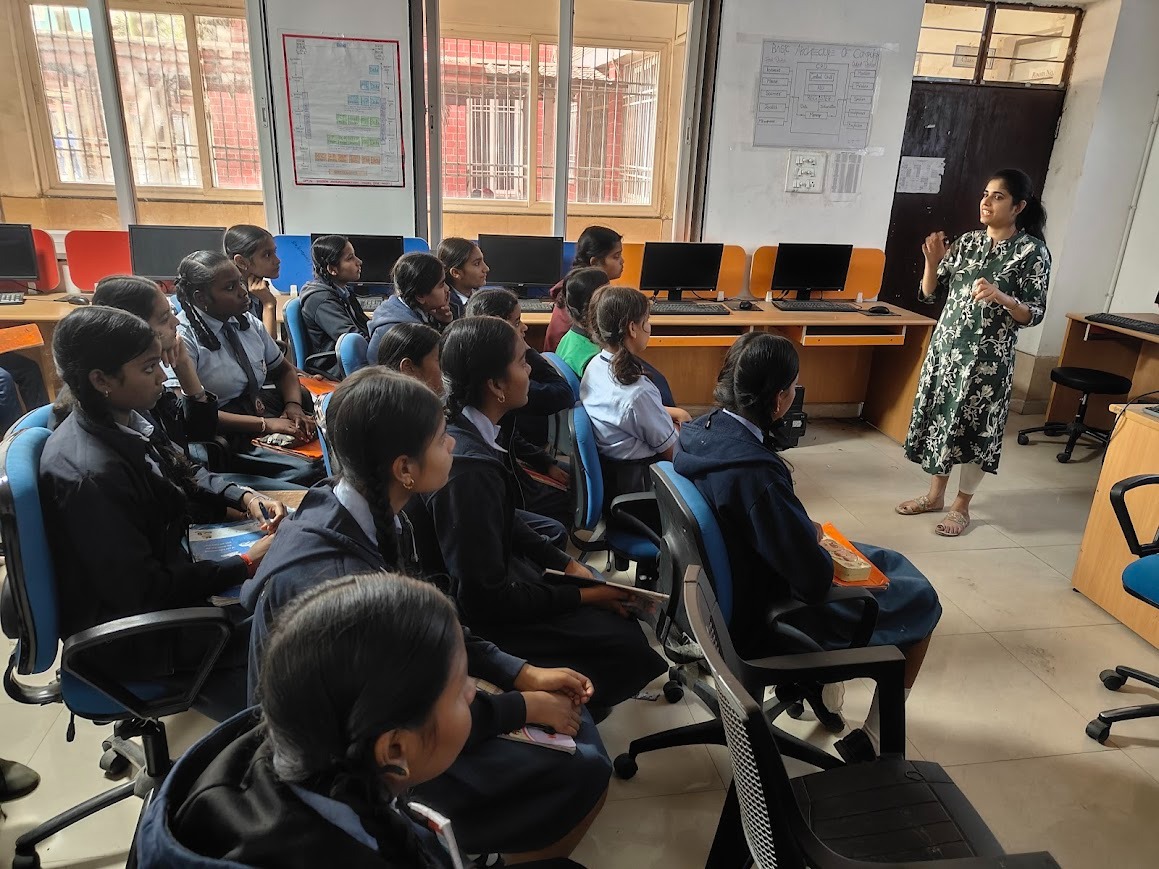
Students managed timelines, divided responsibilities, and sought clarity independently. The responsibility of teaching peers created intrinsic accountability.
Preparing to teach required students to:
Learning moved beyond memorization to conceptual articulation.
Group work evolved into:
Participation was task-driven, not superficial.
Students who were previously hesitant began presenting confidently. Public explanation became a skill practiced, not feared.
As one student shared:
“I honestly couldn’t imagine myself standing up and explaining a presentation to the whole class. I was so nervous at first, but once I started, the words came easily and my fear just disappeared.” — Pihu Shrivastav
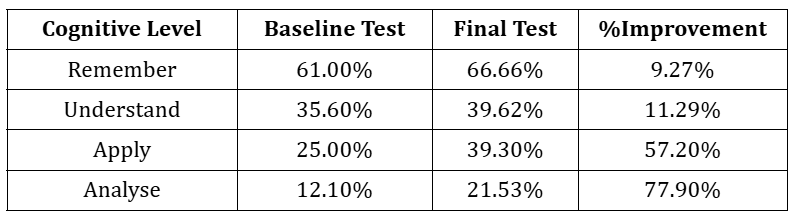
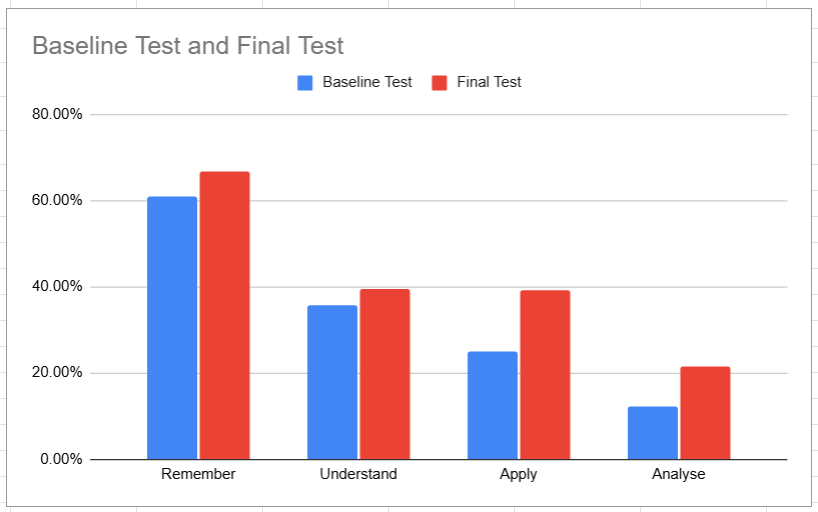
To measure effectiveness, a baseline–final assessment comparison was conducted using Bloom’s cognitive levels:
Key Takeaway:
The largest improvements occurred in Apply and Analyse levels.
This suggests the intervention strengthened:
The classroom didn’t just improve recall — it improved thinking depth.
A critical insight from the study was that technology alone does not transform learning. Pedagogy does.
Cypher was effective because it was:
As one student described:
“Working with Cypher was the best part because it didn't just give us the answers right away. It would first ask us how much we already knew, which made learning feel like a fun game.” — Hiya Sahu
This highlights an important distinction: AI was used to stimulate thinking, not replace it.
Perhaps the most profound change was psychological.
Students reported:
“We learned so many new things during this project that it actually felt like we were the teachers for a moment!” — Bhumika Sahu
This shift—from passive recipient to active contributor—is exactly what both Piaget and Vygotsky identified as the foundation of intellectual development.
Learning is not merely acquiring knowledge.
It is becoming capable of generating it.
The journey was not without challenges:
However, structured orientation, mock sessions, and active facilitation addressed these effectively.
A key lesson emerged:
Ownership does not emerge automatically. It develops when expectations, accountability, and assessment criteria are clearly defined.
The intervention strongly aligns with the principles of NEP 2020:
This positions the model as scalable and relevant for broader educational reform.
Why This Matters for Education Policy
India’s National Education Policy (NEP) 2020 emphasizes competency-based learning, critical thinking, and experiential education.
Yet systemic reform often focuses on curriculum changes or technology adoption alone.
This intervention highlights a deeper truth:
Educational transformation does not require a new curriculum or more technology. It requires redesigning the role of the learner.
AI can accelerate this transformation—but only when pedagogy leads.
If AI is layered onto passive classrooms, it may increase efficiency without improving understanding.
But when embedded within student-centered learning environments, AI can strengthen inquiry, independence, and reasoning.
This case study demonstrates that:
The early results are promising. With further longitudinal data and expanded implementation, this model could represent a sustainable shift toward learner-centered classrooms.
For generations, education systems measure success by how well students answer questions.
But the future may depend more on how well they explain, question, and teach.
When students are trusted with responsibility—supported by structure, facilitation, and thoughtful AI integration—the classroom changes.
Engagement increases.
Confidence grows.
Thinking deepens.
And perhaps most importantly, students begin to see themselves differently—not just as learners, but as thinkers capable of understanding the world independently.
Technology does not create this transformation.
Pedagogy does.
AI simply helps make it possible at scale.
The future of learning will be built by leaders who act—let’s pilot this approach together in your institution.
READ THE FULL CASE STUDY
Piaget, J. (1970). Science of Education and the Psychology of the Child.
Vygotsky, L. (1978). Mind in Society.
Bloom, B. (1956). Taxonomy of Educational Objectives.
Bruner, J. (1961). The Act of Discovery.
Hattie, J. (2009). Visible Learning.
Fiorella, L., & Mayer, R. (2013). Learning by teaching.
Kulik, J., & Fletcher, J. (2016). Intelligent tutoring systems.
Holmes, W., Bialik, M., & Fadel, C. (2019). Artificial Intelligence in Education.

.png)