
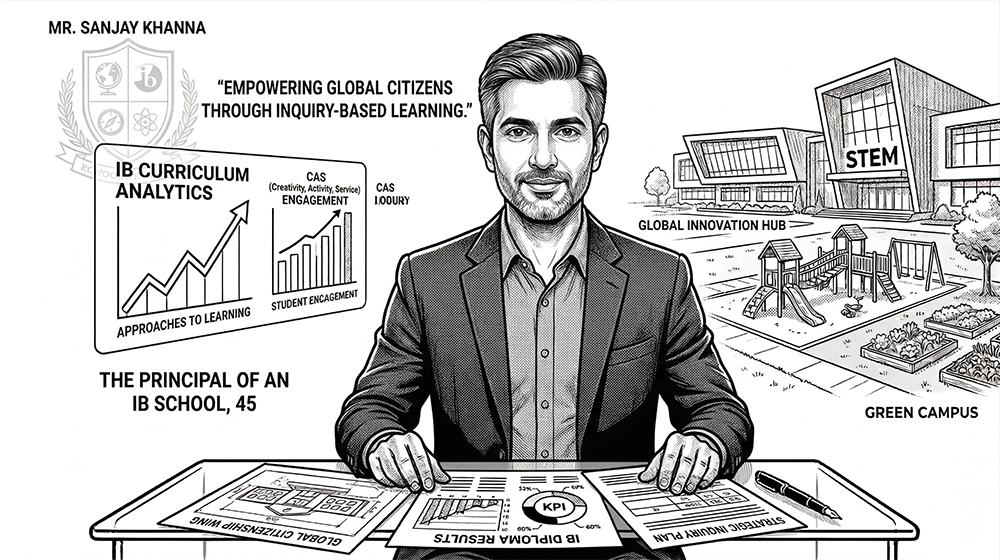
Arvind has a vision statement on his office wall that he wrote himself, in his own handwriting, the day he became Principal seven years ago. It reads: "Every child who walks out of this school should know how to think, not just what to think."
He means it completely. He has meant it every day for seven years.
The gap between that vision and what he can actually observe happening in his school is the thing that keeps him awake at night.
He has 1,200 students, 54 teachers, and a reporting system that tells him exam results, attendance figures, and fee collection status. It tells him almost nothing about learning. Whether his teachers are actually reaching their students. Whether the curriculum changes he implemented two years ago are making a difference. Whether the child in Grade 7 who his instincts tell him is struggling is actually struggling or whether he is imagining it.
He makes decisions — significant decisions about pedagogy, teacher development, curriculum design — largely on observation, experience, and instinct. He is good enough at all three that the school has thrived. But he knows, with the clarity that comes from genuine self-awareness, that he is flying partially blind.
He has tried to fix this. He commissioned a learning audit two years ago. The consultants produced a 47-page report that sat on his desk for six months before he accepted that it described the problem without solving it. He invested in a student information system that tracks marks and attendance beautifully and tells him nothing about actual learning.
When AIRS is introduced across his school, Arvind does something none of his teachers expect. He asks for a student account.
He wants to understand it from the inside.
He spends two weeks interacting with Cypher as if he were a student — exploring concepts, answering questions, watching how the system responds to gaps and strengths. He reads every student's knowledge graph he can access. He sits with Morpheus's school-wide analytics for hours.
What he finds is the closest thing to his vision he has ever seen operationalized.
For the first time, Arvind can see whether his school is actually teaching children to think — not from exam results, which measure memory as much as thinking, but from the interaction patterns, the question-asking behavior, the depth of conceptual connections in each student's knowledge graph.
The vision on his wall stops being aspirational. It becomes, for the first time, measurable.