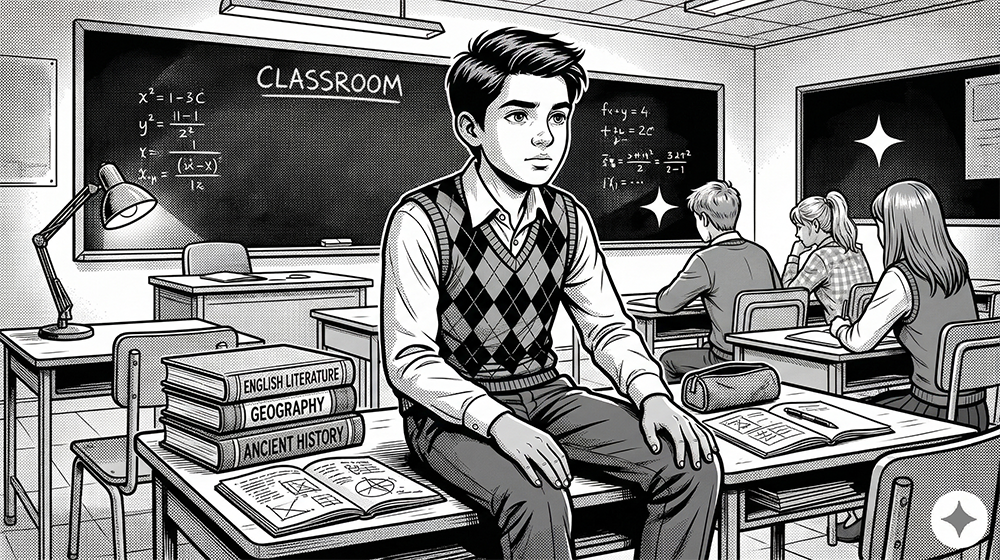
Marcus moved from a British curriculum school in Singapore to an IB school in Hyderabad in October. Mid-year. His parents have reassured him it'll be fine. It is not fine.
The content isn't wildly different. The sequencing is. Things his new class covered in September — which Marcus missed — are assumed knowledge for everything happening in November. He's playing catch-up in a race he doesn't know the route of, in a classroom where everyone else has eight weeks of shared context he doesn't have.
His teachers are kind but they have 35 other students who were there in September. They don't have time to reconstruct two months of class for one new student.
AIRS doesn't need time. It needs data.
Within Marcus's first two weeks of interactions, his knowledge graph begins to take shape — not against a generic template but against the specific sequence his new school follows.
It identifies exactly which concepts his new classmates covered that Marcus hasn't encountered. Not generally. Specifically. Chapter 3, Unit 2, the specific skills around quadratic equations that his Singapore school covered differently.
Cypher builds him a quiet, invisible catch-up track running alongside his regular classes. He's not in a remedial group. Nobody knows. He just gradually fills the gaps, at his own pace, in his own time.
By February, Marcus's knowledge graph looks like his classmates'. He stops feeling like the new kid. He starts feeling like he belongs.