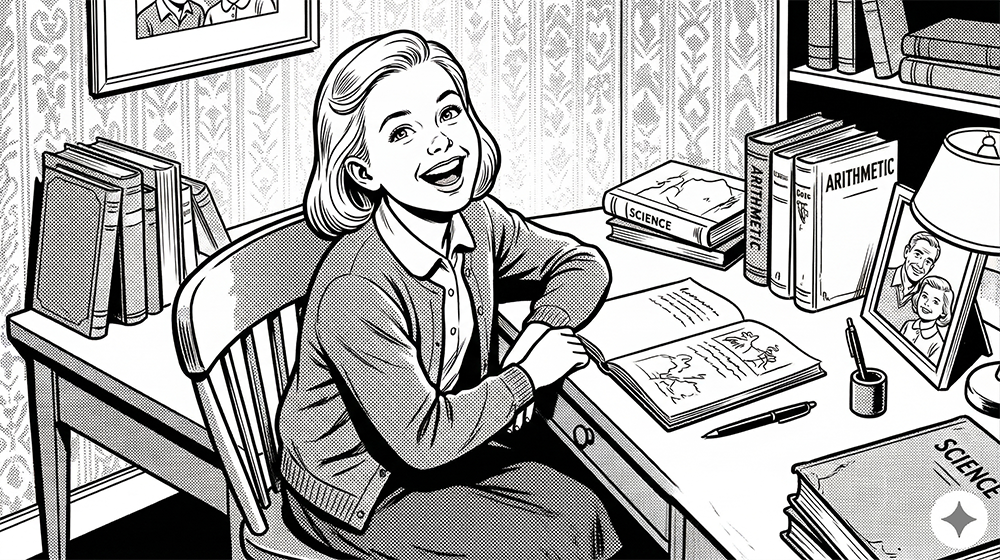
Zara can spend six hours building an animated short film and not notice time passing. She has taught herself three animation tools from YouTube, written scripts, composed background music on GarageBand, and has 2,000 followers on her student animation channel. She is, by any reasonable measure, extraordinarily capable.
She has failed English twice. Not because she can't write — her film scripts are vivid, structured, emotionally sophisticated. Because she can't write the way school wants her to write. Essays bore her into paralysis.
School sees a struggling student. AIRS sees something else entirely. Zara's Creative Index is off the charts. Her engagement data shows she comes alive the moment a task has a making component.
Her Knowledge Index in English isn't low — it's misapplied. She knows narrative structure intuitively from filmmaking. She just doesn't know she knows it, and nobody has connected those dots for her.
Cypher connects them. "You know how your films have a beginning, a tension, and a resolution? That's exactly what an essay structure is. Let's build your next essay the way you'd plan a film."
Her assignments in AIRS have a different shape than her classmates'. Where they write an essay about climate change, Zara builds an annotated storyboard for a climate documentary — same knowledge outcomes, different creative container. Her teacher, using Morpheus, has approved this alternate pathway and can assess it against the same rubric.
Zara doesn't stop hating essays. But she stops failing them. More importantly, she starts seeing her creative ability as an academic asset rather than an inconvenient distraction.