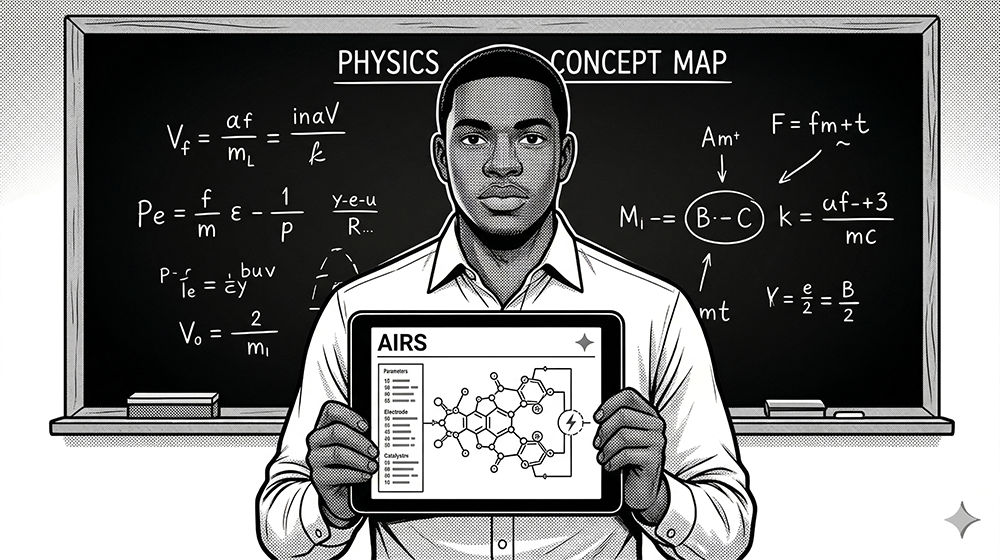
James arrived from Nigeria two years ago on a teaching fellowship. He has a first-class degree in Mathematics, genuine enthusiasm for the subject, and absolutely no idea what to do about the twelve students in Row 3 who look at him every day like he is speaking a language they have never heard.
The experienced teachers around him make it look effortless. They seem to know instinctively when a student is confused, when to push harder, when to slow down. James doesn't have those instincts yet. He knows his subject. He doesn't yet know his students.
His first year is humbling. His assessments are either too easy or too hard. His lesson pacing is off. He gives the same explanation three times and still loses half the class. He stays late, works weekends, and still feels like he is failing the children who need him most.
AIRS becomes, quietly, the mentor he doesn't have.
Morpheus shows him his class's knowledge state in a way he can actually act on. Not vague observations — specific data. Kavya has a strong conceptual grasp but weak procedural fluency. Daniel is the opposite — he can execute the method but doesn't understand why it works. Three students in the middle rows have a gap in fractions that is affecting everything they do with algebra.
James builds his lesson differently now. He knows before he walks into class who needs what. Cypher handles the individual practice and questioning, adapting to each student's level, while James works the room — spending his limited human attention where it matters most.
By his second year, James has stopped feeling like he is improvising. He has a system. And the system makes him look — and feel — like the teacher he always wanted to be.