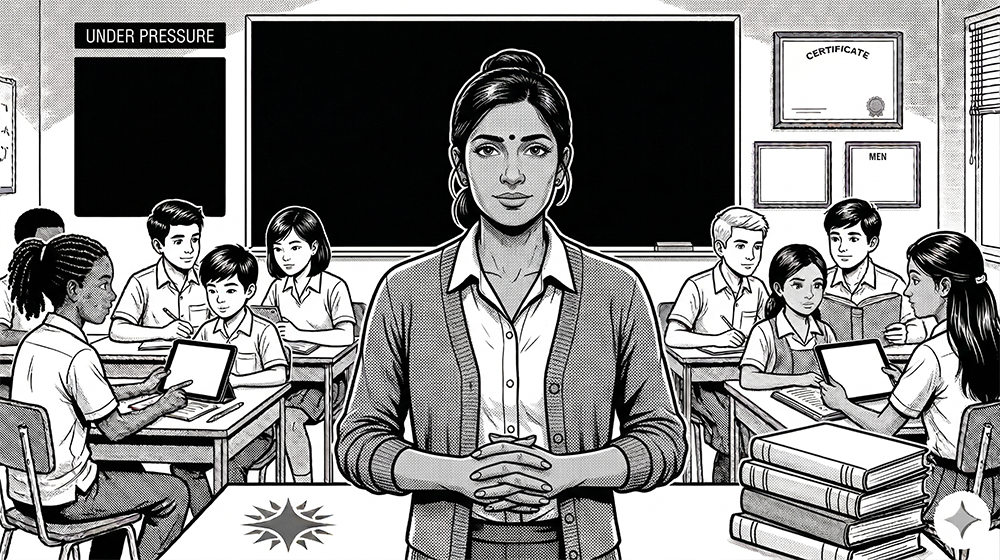
Ananya teaches Grade 10 Mathematics in a school where board results are everything. Her performance review is tied to her class average. Parents email the principal when their child drops two marks. She has been pulled into three meetings this term to explain why a particular student's trajectory is declining.
She became a teacher because she loved the moment a student's face changes when they finally understand something difficult. That moment still happens. It just happens in a climate of constant measurement, comparison, and accountability that makes the joy harder to hold onto.
The pressure has changed how she teaches. She teaches to the test now. She knows it. She doesn't like it. She doesn't see an alternative.
AIRS doesn't remove the pressure. But it changes her relationship with it.
For the first time, Ananya has evidence. When a parent asks why their child is struggling, she doesn't have to rely on impressions and gut feel. She opens Morpheus and shows them exactly where their child's knowledge graph has gaps, when those gaps appeared, what interventions have been tried, and what the data says about the path forward. The conversation changes from accusation to collaboration.
When her principal asks about class performance, she has a school-wide knowledge health report — not just marks but learning trajectories, intervention records, and projected outcomes based on current knowledge states.
She is still accountable. But now she has the data to be accountable with confidence rather than anxiety.
And sometimes, in the middle of a lesson, when the pressure quiets for a moment, she catches the look on a student's face — that specific look — and remembers exactly why she chose this.