Every parent sitting in a school car park at 3:30pm is carrying the same quiet question.
Is my child going to be okay?
Not just academically. Okay in the full sense — understood, supported, stretched appropriately, seen for who they are rather than reduced to a rank or a percentage. It is the deepest question a parent carries, and the one the education system is least equipped to answer with any real precision.
Today's parents are not the passive recipients of previous generations. They are analytically capable, digitally fluent, used to real-time information in every other area of their lives — their finances, their health, their work. They manage complexity for a living. They read dashboards, interpret data, and make informed decisions daily.
And then their child walks into school and they go almost completely blind.
A report card four times a year. A ten-minute parent-teacher meeting where seventeen other families are waiting outside. A grade that tells you where your child finished but nothing about how they got there, what they understood, what they missed, or what should happen next. Into that information vacuum, parents do what humans do — they worry, they push, they over-involve or helplessly withdraw, they spend on tutors that may or may not be addressing the right thing.It is not a failure of parenting. It is a failure of information.AI Ready School was built on the belief that parents deserve to be genuine partners in their child's education — not passengers who receive periodic updates, not adversaries pressuring schools for data they can't access, but informed, empowered collaborators who understand what is happening in their child's learning and know how to support it.
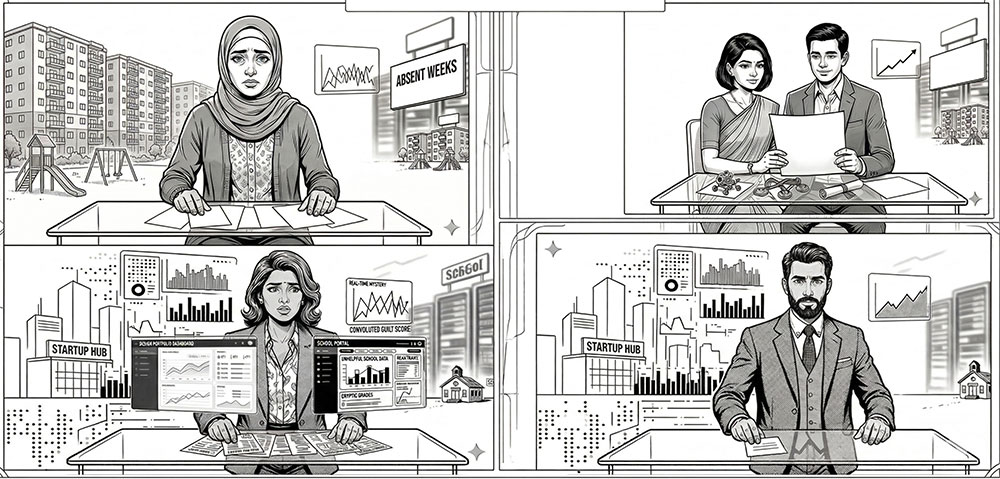
The six stories below are about parents you will recognise — perhaps in your own mirror. Each one shows how the right information, at the right time, in the right language, transforms not just what a parent can do for their child, but what kind of relationship they can build with them.
Because a parent who truly understands their child's learning doesn't just help with school. They help their child feel seen.
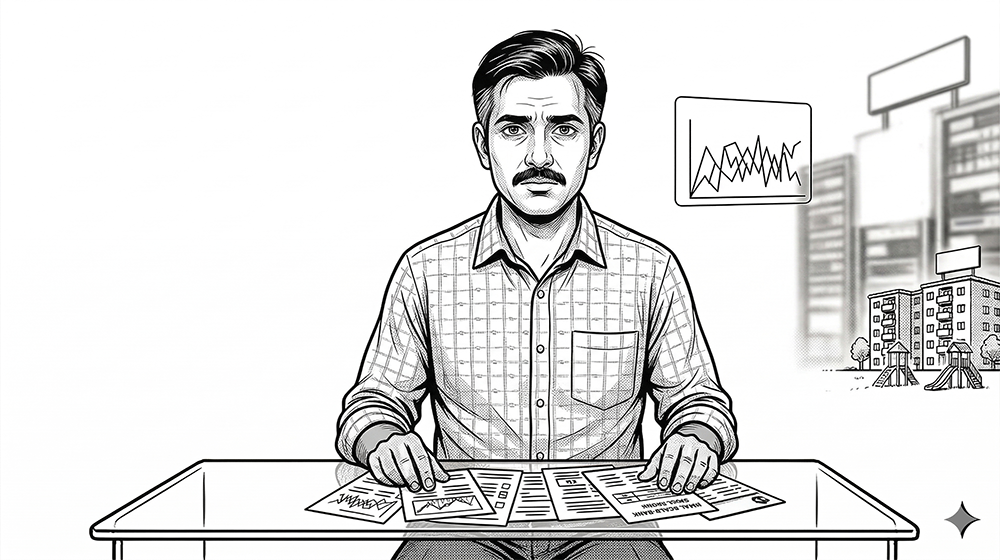
Ramesh moved his family to Hyderabad and pays significant school fees with immense pride — and a quiet anxiety about whether it's actually working. AIRS gives him a language simple enough to act on and specific enough to finally make him a real participant in his daughter's education.
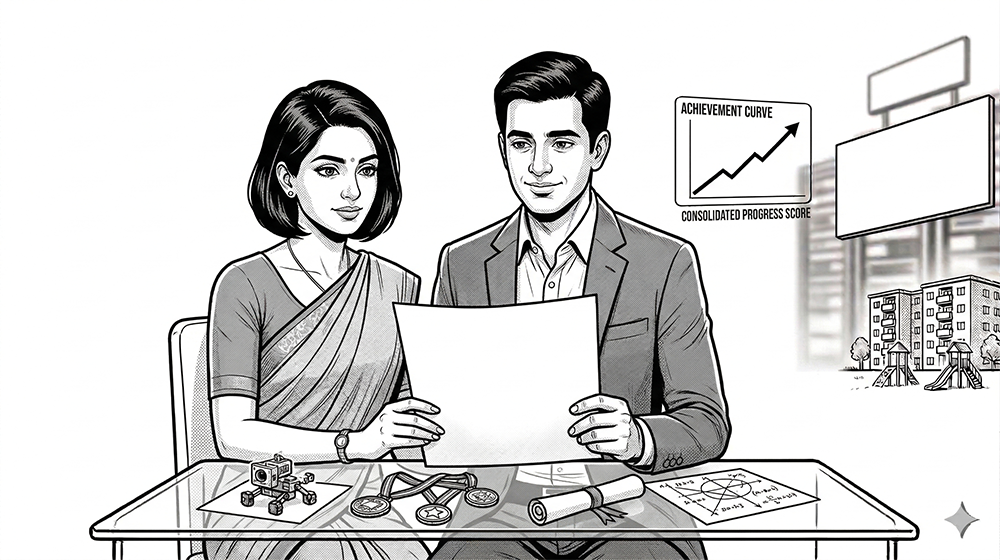
Ananya and Karthik know their daughter Sia is bored — they can see it in her face every morning when she picks up her school bag. AIRS meets Sia where she actually is, goes further than the curriculum dares, and turns school into something she chooses to engage with in her own time.
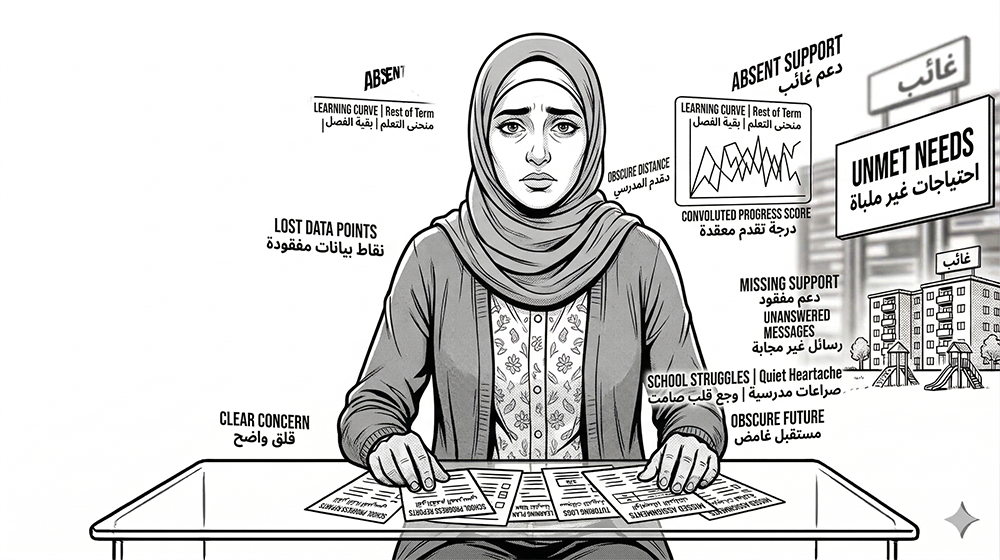
Fatima is a lawyer who has sat through nine parent-teacher meetings and accepted "we are keeping an eye on it" nine times because she had no data of her own to push back with. AIRS finds in eight weeks what seven years of observation missed — and gives Omar, finally, a precise path forward.
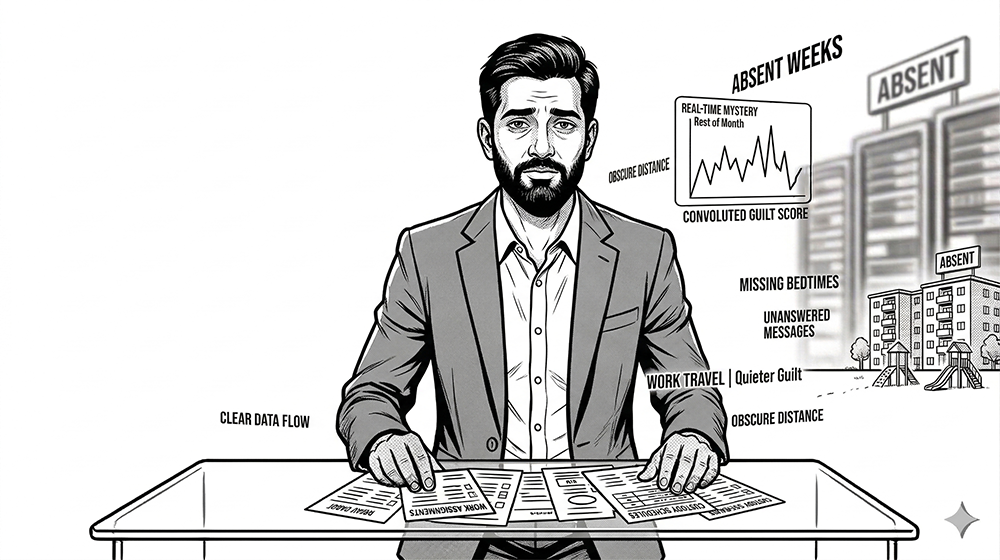
Aditya is the father who is fully present two weekends a month and carries quiet guilt about the rest. AIRS gives him twelve minutes of real information that turns into thirty minutes of genuine connection with his son — from a hotel room in Mumbai.
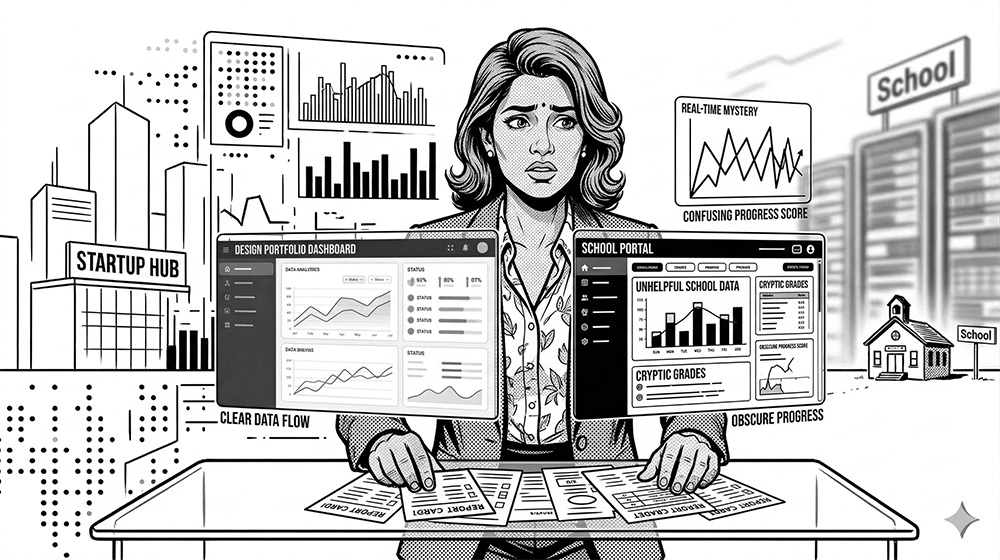
Preethi is a UX designer who can read any dashboard — except the ones her daughter's school provides, which tell her almost nothing. AIRS finally gives her the clear, real-time picture of Kavya's learning she has been looking for since Grade 3.
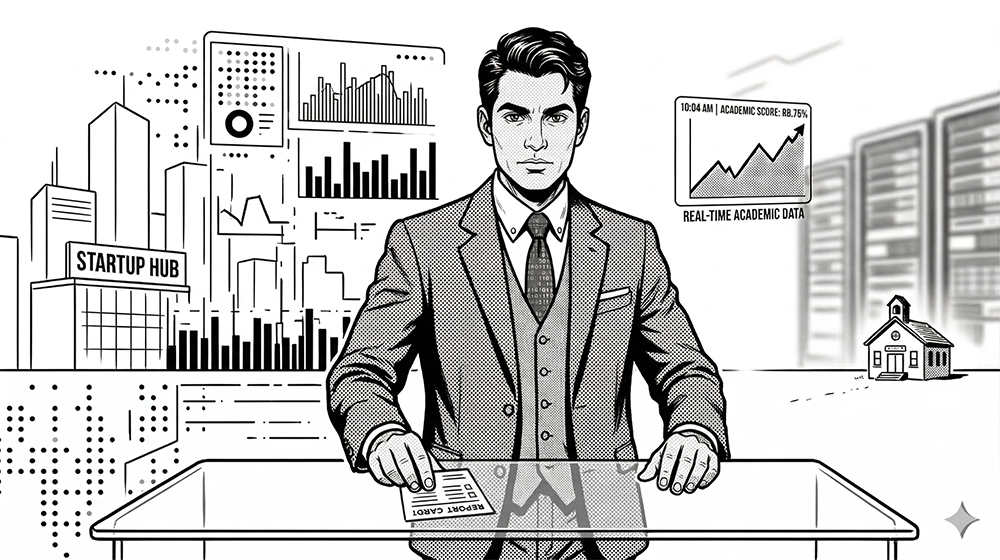
Vikram built his startup on real-time data and has no patience for a school system that gives him a report card four times a year. AIRS gives him the precise, continuously updated signal he needs to move from applying pressure to providing direction.
Human First. AI Next.™
